
AlphaFold predicted structure
KYNU · Q16719
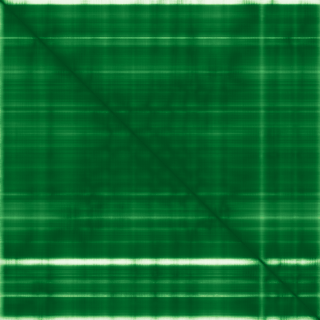
Mean pLDDT
95.4/ 100
Very high
465 residues
Confidence breakdown
- Very high(≥ 90)93%
- Confident(70–90)4%
- Low(50–70)2%
- Very low(< 50)1%
Open interactive 3D viewer
AlphaFold (Jumper et al., 2021) · CC BY 4.0
kynureninase
Annotations refreshed 3 months ago.
Diagnostic Grade (Green)
CAKUT
BIALLELIC, autosomal or pseudoautosomalFetal anomalies
BIALLELIC, autosomal or pseudoautosomalLikely inborn error of metabolism
BIALLELIC, autosomal or pseudoautosomalLimb disorders
BIALLELIC, autosomal or pseudoautosomalUndiagnosed metabolic disorders
BIALLELIC, autosomal or pseudoautosomalUnexplained young onset end-stage renal disease - additional genes
BIALLELIC, autosomal or pseudoautosomalVACTERL-like phenotypes
BIALLELIC, autosomal or pseudoautosomalChildhood onset dystonia, chorea or related movement disorder
vertebral, cardiac, renal, and limb defects syndrome 2
congenital vertebral-cardiac-renal anomalies syndrome
encephalopathy due to hydroxykynureninuria
Catel-Manzke syndrome
cataract
neurodegenerative disease
pulmonary vascular congestion
macular degeneration
respiratory system disorder
malunion fracture
Score is the Open Targets composite evidence score (0-1). Higher = stronger gene-disease association.
Kynureninase
Catalyzes the cleavage of L-kynurenine (L-Kyn) and L-3-hydroxykynurenine (L-3OHKyn) into anthranilic acid (AA) and 3-hydroxyanthranilic acid (3-OHAA), respectively. Has a preference for the L-3-hydroxy form. Also has cysteine-conjugate-beta-lyase activity
KYNU · Q16719
Mean pLDDT
95.4/ 100
Very high
465 residues
Confidence breakdown
AlphaFold (Jumper et al., 2021) · CC BY 4.0