
AlphaFold predicted structure
LAS1L · Q9Y4W2
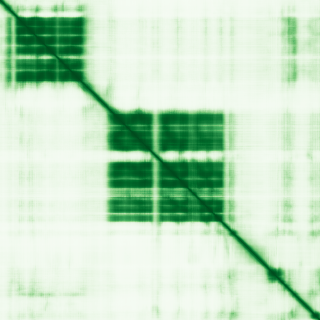
Mean pLDDT
62.5/ 100
Low
734 residues
Confidence breakdown
- Very high(≥ 90)24%
- Confident(70–90)23%
- Low(50–70)12%
- Very low(< 50)41%
Open interactive 3D viewer
AlphaFold (Jumper et al., 2021) · CC BY 4.0
LAS1 like ribosome biogenesis factor
Annotations refreshed 3 months ago.
Moderate Evidence (Amber)
Intellectual disability
X-LINKED: hemizygous mutation in males, biallelic mutations in femalesDDG2P
X-LINKED: hemizygous mutation in males, biallelic mutations in femalesHereditary neuropathy
X-LINKED: hemizygous mutation in males, monoallelic mutations in females may cause disease (may be less severe, later onset than males)Hereditary neuropathy or pain disorder
X-LINKED: hemizygous mutation in males, monoallelic mutations in females may cause disease (may be less severe, later onset than males)Wilson-Turner syndrome
spinal muscular atrophy with respiratory distress type 2
hereditary disease
Global developmental delay
neurodevelopmental disorder
autism spectrum disorder
neurodegenerative disease
cardiovascular disorder
response to xenobiotic stimulus
hypertensive disorder
Score is the Open Targets composite evidence score (0-1). Higher = stronger gene-disease association.
Ribosomal biogenesis protein LAS1L
Required for the synthesis of the 60S ribosomal subunit and maturation of the 28S rRNA (PubMed:20647540). Functions as a component of the Five Friends of Methylated CHTOP (5FMC) complex; the 5FMC complex is recruited to ZNF148 by methylated CHTOP, leading to desumoylation of ZNF148 and subsequent transactivation of ZNF148 target genes (PubMed:22872859). Required for the efficient pre-rRNA processing at both ends of internal transcribed spacer 2 (ITS2) (PubMed:22083961)
LAS1L · Q9Y4W2
Mean pLDDT
62.5/ 100
Low
734 residues
Confidence breakdown
AlphaFold (Jumper et al., 2021) · CC BY 4.0