
AlphaFold predicted structure
LAT · O43561
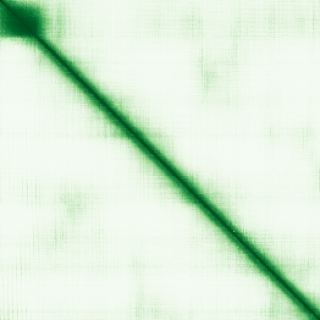
Mean pLDDT
59.3/ 100
Low
262 residues
Confidence breakdown
- Very high(≥ 90)6%
- Confident(70–90)12%
- Low(50–70)56%
- Very low(< 50)26%
Open interactive 3D viewer
AlphaFold (Jumper et al., 2021) · CC BY 4.0
linker for activation of T cells
Annotations refreshed 2 months ago.
Diagnostic Grade (Green)
COVID-19 research
BIALLELIC, autosomal or pseudoautosomalPrimary immunodeficiency or monogenic inflammatory bowel disease
BIALLELIC, autosomal or pseudoautosomalCytopenia - NOT Fanconi anaemia
BIALLELIC, autosomal or pseudoautosomalCytopenias and congenital anaemias
BIALLELIC, autosomal or pseudoautosomalInherited bleeding disorders
BIALLELIC, autosomal or pseudoautosomalsevere combined immunodeficiency due to LAT deficiency
sarcoidosis
autoimmune disorder of central nervous system
Alzheimer disease
sinusitis
liver disorder
neoplasm
breast cancer
breast carcinoma
colorectal carcinoma
Score is the Open Targets composite evidence score (0-1). Higher = stronger gene-disease association.
Linker for activation of T-cells family member 1
Required for TCR (T-cell antigen receptor)- and pre-TCR-mediated signaling, both in mature T-cells and during their development (PubMed:23514740, PubMed:25907557). Involved in FCGR3 (low affinity immunoglobulin gamma Fc region receptor III)-mediated signaling in natural killer cells and FCER1 (high affinity immunoglobulin epsilon receptor)-mediated signaling in mast cells. Couples activation of these receptors and their associated kinases with distal intracellular events such as mobilization of intracellular calcium stores, PKC activation, MAPK activation or cytoskeletal reorganization through the recruitment of PLCG1, GRB2, GRAP2, and other signaling molecules
LAT · O43561
Mean pLDDT
59.3/ 100
Low
262 residues
Confidence breakdown
AlphaFold (Jumper et al., 2021) · CC BY 4.0