
AlphaFold predicted structure
LCAT · P04180
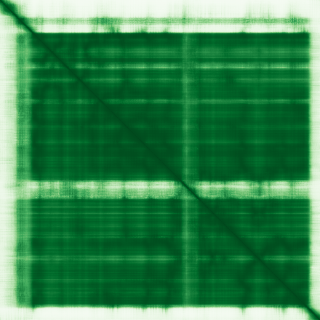
Mean pLDDT
86.8/ 100
Confident
440 residues
Confidence breakdown
- Very high(≥ 90)71%
- Confident(70–90)10%
- Low(50–70)10%
- Very low(< 50)9%
Open interactive 3D viewer
AlphaFold (Jumper et al., 2021) · CC BY 4.0
lecithin-cholesterol acyltransferase
Annotations refreshed 2 months ago.
Diagnostic Grade (Green)
Bilateral congenital or childhood onset cataracts
BIALLELIC, autosomal or pseudoautosomalCorneal dystrophy
BIALLELIC, autosomal or pseudoautosomalLikely inborn error of metabolism
BIALLELIC, autosomal or pseudoautosomalProteinuric renal disease
BIALLELIC, autosomal or pseudoautosomalUndiagnosed metabolic disorders
BIALLELIC, autosomal or pseudoautosomalChildhood onset dystonia, chorea or related movement disorder
Familial hypercholesterolaemia
Structural eye disease
BIALLELIC, autosomal or pseudoautosomalLCAT deficiency
Fish-eye disease
Norum disease
fish eye disease
Familial LCAT deficiency
Abnormality of the cardiovascular system
small intestine neoplasm
metabolic syndrome
hepatocellular carcinoma
chronic kidney disease
Score is the Open Targets composite evidence score (0-1). Higher = stronger gene-disease association.
Phosphatidylcholine-sterol acyltransferase
Central enzyme in the extracellular metabolism of plasma lipoproteins. Synthesized mainly in the liver and secreted into plasma where it converts cholesterol and phosphatidylcholines (lecithins) to cholesteryl esters and lysophosphatidylcholines on the surface of high and low density lipoproteins (HDLs and LDLs) (PubMed:10329423, PubMed:19065001, PubMed:26195816). The cholesterol ester is then transported back to the liver. Has a preference for plasma 16:0-18:2 or 18:O-18:2 phosphatidylcholines (PubMed:8820107). Also produced in the brain by primary astrocytes, and esterifies free cholesterol on nascent APOE-containing lipoproteins secreted from glia and influences cerebral spinal fluid (CSF) APOE- and APOA1 levels. Together with APOE and the cholesterol transporter ABCA1, plays a key role in the maturation of glial-derived, nascent lipoproteins. Required for remodeling high-density lipoprotein particles into their spherical forms (PubMed:10722751). Catalyzes the hydrolysis of 1-O-alkyl-2-acetyl-sn-glycero-3-phosphocholine (platelet-activating factor or PAF) to 1-O-alkyl-sn-glycero-3-phosphocholine (lyso-PAF) (PubMed:8016111). Also catalyzes the transfer of the acetate group from PAF to 1-hexadecanoyl-sn-glycero-3-phosphocholine forming lyso-PAF (PubMed:8016111). Catalyzes the esterification of (24S)-hydroxycholesterol (24(S)OH-C), also known as cerebrosterol to produce 24(S)OH-C monoesters (PubMed:24620755)
LCAT · P04180
Mean pLDDT
86.8/ 100
Confident
440 residues
Confidence breakdown
AlphaFold (Jumper et al., 2021) · CC BY 4.0