
AlphaFold predicted structure
LCK · P06239
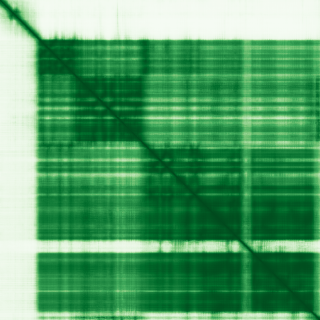
Mean pLDDT
83.6/ 100
Confident
509 residues
Confidence breakdown
- Very high(≥ 90)61%
- Confident(70–90)22%
- Low(50–70)6%
- Very low(< 50)12%
Open interactive 3D viewer
AlphaFold (Jumper et al., 2021) · CC BY 4.0
LCK proto-oncogene, Src family tyrosine kinase
Annotations refreshed 2 months ago.
Diagnostic Grade (Green)
COVID-19 research
BIALLELIC, autosomal or pseudoautosomalPrimary immunodeficiency or monogenic inflammatory bowel disease
BIALLELIC, autosomal or pseudoautosomalsevere combined immunodeficiency due to LCK deficiency
acute lymphoblastic leukemia
cancer
chronic myelogenous leukemia, BCR-ABL1 positive
renal cell carcinoma
severe combined immunodeficiency
soft tissue sarcoma
sarcoma
neoplasm
combined immunodeficiency
Score is the Open Targets composite evidence score (0-1). Higher = stronger gene-disease association.
Tyrosine-protein kinase Lck
Non-receptor tyrosine-protein kinase that plays an essential role in the selection and maturation of developing T-cells in the thymus and in the function of mature T-cells (PubMed:2470098). Plays a key role in T-cell antigen receptor (TCR)-linked signal transduction pathways (PubMed:2470098). Constitutively associated with the cytoplasmic portions of the CD4 and CD8 surface receptors (PubMed:2470098). Association of the TCR with a peptide antigen-bound MHC complex facilitates the interaction of CD4 and CD8 with MHC class II and class I molecules, respectively, thereby recruiting the associated LCK protein to the vicinity of the TCR-CD3 complex (PubMed:2470098). LCK then phosphorylates tyrosine residues within the immunoreceptor tyrosine-based activation motifs (ITAM) of the cytoplasmic tails of the TCR-gamma chains and CD3 subunits, initiating the TCR-CD3 signaling pathway (PubMed:2470098, PubMed:40592325). Once stimulated, the TCR recruits the tyrosine kinase ZAP70, that becomes phosphorylated and activated by LCK. Following this, a large number of signaling molecules are recruited, ultimately leading to lymphokine production. LCK also contributes to signaling by other receptor molecules. Associates directly with the cytoplasmic tail of CD2, which leads to hyperphosphorylation and activation of LCK. Also plays a role in the IL2 receptor-linked signaling pathway that controls the T-cell proliferative response. Binding of IL2 to its receptor results in increased activity of LCK. Is expressed at all stages of thymocyte development and is required for the regulation of maturation events that are governed by both pre-TCR and mature alpha beta TCR. Phosphorylates other substrates including RUNX3, PTK2B/PYK2, the microtubule-associated protein MAPT, RHOH or TYROBP. Interacts with FYB2 (PubMed:27335501)
Curated MONDO disease pages that list LCK among their top associated genes.
LCK · P06239
Mean pLDDT
83.6/ 100
Confident
509 residues
Confidence breakdown
AlphaFold (Jumper et al., 2021) · CC BY 4.0