
AlphaFold predicted structure
LCT · P09848
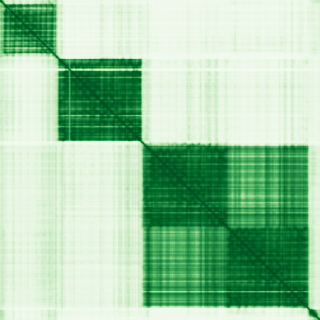
Mean pLDDT
86.2/ 100
Confident
1,927 residues
Confidence breakdown
- Very high(≥ 90)65%
- Confident(70–90)22%
- Low(50–70)7%
- Very low(< 50)6%
Open interactive 3D viewer
AlphaFold (Jumper et al., 2021) · CC BY 4.0
lactase
Annotations refreshed 3 months ago.
Diagnostic Grade (Green)
Intestinal failure or congenital diarrhoea
BIALLELIC, autosomal or pseudoautosomalLikely inborn error of metabolism
BIALLELIC, autosomal or pseudoautosomalUndiagnosed metabolic disorders
BIALLELIC, autosomal or pseudoautosomalBilateral congenital or childhood onset cataracts
Childhood onset dystonia, chorea or related movement disorder
congenital lactase deficiency
lactose intolerance adult type
obesity disorder
lactose intolerance
morbid obesity
sleep disorder
Sjogren syndrome
metabolic syndrome
cutaneous lupus erythematosus
nervous system disorder
Score is the Open Targets composite evidence score (0-1). Higher = stronger gene-disease association.
Lactase/phlorizin hydrolase
Broad specificity glycosidase of the intestinal brush border membrane that hydrolyzes lactose, the main sugar in mammalian milk, to produce D-glucose and D-galactose (PubMed:12594539, PubMed:16400612, PubMed:3929764, PubMed:9762914). The mature protein is composed of two domains that catalyze the hydrolysis of beta-glucopyranosides and beta-galactopyranosides, with a preference for hydrophilic aglycones (in lactose and cellobiose) for one domain and hydrophobic aglycones (in phlorizin and glycosylceramides) for the other (PubMed:12594539, PubMed:3929764, PubMed:9762914)
LCT · P09848
Mean pLDDT
86.2/ 100
Confident
1,927 residues
Confidence breakdown
AlphaFold (Jumper et al., 2021) · CC BY 4.0