
AlphaFold predicted structure
LDHD · Q86WU2
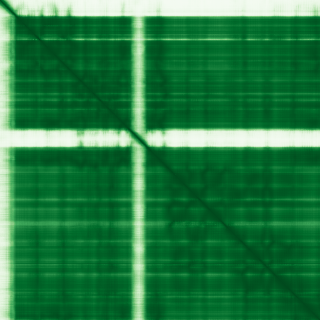
Mean pLDDT
89.8/ 100
Confident
507 residues
Confidence breakdown
- Very high(≥ 90)86%
- Confident(70–90)4%
- Low(50–70)2%
- Very low(< 50)9%
Open interactive 3D viewer
AlphaFold (Jumper et al., 2021) · CC BY 4.0
lactate dehydrogenase D
Annotations refreshed 3 months ago.
Moderate Evidence (Amber)
Likely inborn error of metabolism
BIALLELIC, autosomal or pseudoautosomallactic aciduria due to D-lactic acid
Abnormal circulating lactate dehydrogenase concentration
hepatocellular carcinoma
esophageal squamous cell carcinoma
cardiovascular disorder
uterine corpus sarcoma
neoplasm
cancer
nonpapillary renal cell carcinoma
clear cell renal carcinoma
Score is the Open Targets composite evidence score (0-1). Higher = stronger gene-disease association.
D-lactate dehydrogenase, mitochondrial
The mitochondrial D-lactate dehydrogenase is a stereoselective dehydrogenase that targets a wide variety of D-2-hydroxyacids, particularly those with small to moderately sized hydrophobic groups attached to the C2 atom. It includes D-lactate which is generated in small amounts either endogenously through the methylglyoxal metabolism pathway or exogenously via intestinal bacterial activity and dietary intake. The dehydrogenase acts specifically on D-lactate, not on its stereoisomer L-lactate, and prevents the toxic accumulation of D-lactate in the organism (PubMed:30931947, PubMed:38373542). By converting branched-chain D-2-hydroxyacids into branched-chain ketoacids, it may indirectly regulate branched-chain amino acid metabolism (By similarity)
LDHD · Q86WU2
Mean pLDDT
89.8/ 100
Confident
507 residues
Confidence breakdown
AlphaFold (Jumper et al., 2021) · CC BY 4.0