AlphaFold predicted structure
LDLR · P01130
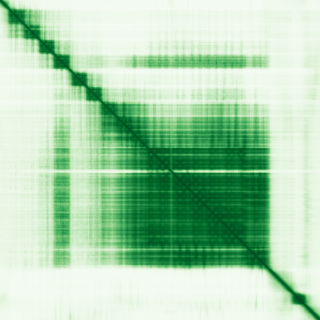
Mean pLDDT
75.4/ 100
Confident
860 residues
Confidence breakdown
- Very high(≥ 90)28%
- Confident(70–90)45%
- Low(50–70)11%
- Very low(< 50)17%
AlphaFold (Jumper et al., 2021) · CC BY 4.0
low density lipoprotein receptor
Annotations refreshed 1 month ago.
Diagnostic Grade (Green)
Additional findings health related
MONOALLELIC, autosomal or pseudoautosomal, NOT imprintedAdditional findings health related - children
MONOALLELIC, autosomal or pseudoautosomal, NOT imprintedAdditional findings health related - CNV analysis children
MONOALLELIC, autosomal or pseudoautosomal, NOT imprintedFamilial hypercholesterolaemia
MONOALLELIC, autosomal or pseudoautosomal, NOT imprintedFamilial hypercholesterolaemia (GMS)
MONOALLELIC, autosomal or pseudoautosomal, NOT imprintedLikely inborn error of metabolism
MONOALLELIC, autosomal or pseudoautosomal, NOT imprintedUndiagnosed metabolic disorders
MONOALLELIC, autosomal or pseudoautosomal, NOT imprintedChildhood onset dystonia, chorea or related movement disorder
+1 more panels — install the extension to see the full list inline on any page.
hypercholesterolemia, familial, 1
Hypercholesterolemia
familial hypercholesterolemia
homozygous familial hypercholesterolemia
coronary artery disorder
metabolic disease
heart disorder
hyperlipidemia
angina pectoris
Disorder of lipid metabolism
Score is the Open Targets composite evidence score (0-1). Higher = stronger gene-disease association.
Low-density lipoprotein receptor
Binds low density lipoprotein /LDL, the major cholesterol-carrying lipoprotein of plasma, and transports it into cells by endocytosis. In order to be internalized, the receptor-ligand complexes must first cluster into clathrin-coated pits. Forms a ternary complex with PGRMC1 and TMEM97 receptors which increases LDLR-mediated LDL internalization (PubMed:30443021)
Curated MONDO disease pages that list LDLR among their top associated genes.
LDLR · P01130

Mean pLDDT
75.4/ 100
Confident
860 residues
Confidence breakdown
AlphaFold (Jumper et al., 2021) · CC BY 4.0