
AlphaFold predicted structure
LHX3 · Q9UBR4
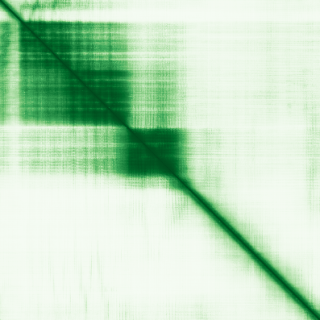
Mean pLDDT
67.2/ 100
Low
397 residues
Confidence breakdown
- Very high(≥ 90)31%
- Confident(70–90)17%
- Low(50–70)10%
- Very low(< 50)42%
Open interactive 3D viewer
AlphaFold (Jumper et al., 2021) · CC BY 4.0
LIM homeobox 3
Annotations refreshed 2 months ago.
Diagnostic Grade (Green)
Congenital hypothyroidism
BIALLELIC, autosomal or pseudoautosomalDDG2P
BIALLELIC, autosomal or pseudoautosomalFetal anomalies
BIALLELIC, autosomal or pseudoautosomalIUGR and IGF abnormalities
BIALLELIC, autosomal or pseudoautosomalMonogenic hearing loss
BIALLELIC, autosomal or pseudoautosomalPituitary hormone deficiency
BIALLELIC, autosomal or pseudoautosomalHypogonadotropic hypogonadism
BIALLELIC, autosomal or pseudoautosomalIntellectual disability
BIALLELIC, autosomal or pseudoautosomal+2 more panels — install the extension to see the full list inline on any page.
non-acquired combined pituitary hormone deficiency with spine abnormalities
Combined pituitary hormone deficiencies, genetic forms
neurodegenerative disease
combined pituitary hormone deficiencies, genetic form
atrial fibrillation
sensorineural hearing loss disorder
Sensorineural hearing impairment
Abnormality of the skeletal system
hypothyroidism due to deficient transcription factors involved in pituitary development or function
Abnormal nasolacrimal system morphology
Score is the Open Targets composite evidence score (0-1). Higher = stronger gene-disease association.
LIM/homeobox protein Lhx3
Transcription factor. Recognizes and binds to the consensus sequence motif 5'-AATTAATTA-3' in the regulatory elements of target genes, such as glycoprotein hormones alpha chain CGA and visual system homeobox CHX10, positively modulating transcription; transcription can be co-activated by LDB2. Synergistically enhances transcription from the prolactin promoter in cooperation with POU1F1/Pit-1 (By similarity). Required for the establishment of the specialized cells of the pituitary gland and the nervous system (PubMed:21149718). Involved in the development of interneurons and motor neurons in cooperation with LDB1 and ISL1 (By similarity)
LHX3 · Q9UBR4
Mean pLDDT
67.2/ 100
Low
397 residues
Confidence breakdown
AlphaFold (Jumper et al., 2021) · CC BY 4.0