
AlphaFold predicted structure
LHX4 · Q969G2
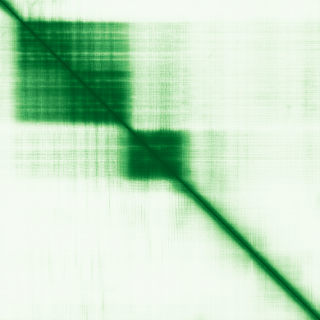
Mean pLDDT
67.3/ 100
Low
390 residues
Confidence breakdown
- Very high(≥ 90)34%
- Confident(70–90)14%
- Low(50–70)12%
- Very low(< 50)40%
Open interactive 3D viewer
AlphaFold (Jumper et al., 2021) · CC BY 4.0
LIM homeobox 4
Annotations refreshed 3 months ago.
Diagnostic Grade (Green)
Congenital hypothyroidism
MONOALLELIC, autosomal or pseudoautosomal, NOT imprintedDDG2P
MONOALLELIC, autosomal or pseudoautosomal, imprinted status unknownFetal anomalies
MONOALLELIC, autosomal or pseudoautosomal, imprinted status unknownHypogonadotropic hypogonadism
MONOALLELIC, autosomal or pseudoautosomal, NOT imprintedIUGR and IGF abnormalities
MONOALLELIC, autosomal or pseudoautosomal, NOT imprintedPituitary hormone deficiency
MONOALLELIC, autosomal or pseudoautosomal, imprinted status unknownHypogonadotropic hypogonadism (GMS)
MONOALLELIC, autosomal or pseudoautosomal, NOT imprintedIntellectual disability
MONOALLELIC, autosomal or pseudoautosomal, imprinted status unknown+1 more panels — install the extension to see the full list inline on any page.
Short stature - pituitary and cerebellar defects - small sella turcica
short stature-pituitary and cerebellar defects-small sella turcica syndrome
Combined pituitary hormone deficiencies, genetic forms
neurodegenerative disease
combined pituitary hormone deficiencies, genetic form
hypopituitarism
pituitary stalk interruption syndrome
Abnormal cerebellum morphology
hypothyroidism due to deficient transcription factors involved in pituitary development or function
hereditary disease
Score is the Open Targets composite evidence score (0-1). Higher = stronger gene-disease association.
LIM/homeobox protein Lhx4
May play a critical role in the development of respiratory control mechanisms and in the normal growth and maturation of the lung. Binds preferentially to methylated DNA (PubMed:28473536)
LHX4 · Q969G2
Mean pLDDT
67.3/ 100
Low
390 residues
Confidence breakdown
AlphaFold (Jumper et al., 2021) · CC BY 4.0