
AlphaFold predicted structure
LIG4 · P49917
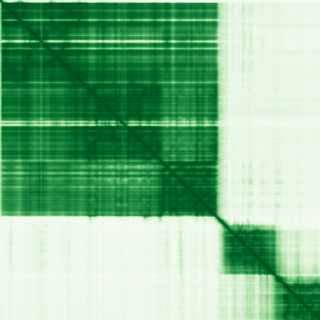
Mean pLDDT
88.2/ 100
Confident
911 residues
Confidence breakdown
- Very high(≥ 90)63%
- Confident(70–90)28%
- Low(50–70)6%
- Very low(< 50)3%
Open interactive 3D viewer
AlphaFold (Jumper et al., 2021) · CC BY 4.0
DNA ligase 4
Annotations refreshed 3 months ago.
Diagnostic Grade (Green)
COVID-19 research
BIALLELIC, autosomal or pseudoautosomalDDG2P
BIALLELIC, autosomal or pseudoautosomalFetal anomalies
BIALLELIC, autosomal or pseudoautosomalHaematological malignancies cancer susceptibility
BIALLELIC, autosomal or pseudoautosomalHaematological malignancies for rare disease
BIALLELIC, autosomal or pseudoautosomalInfantile enterocolitis & monogenic inflammatory bowel disease
BIALLELIC, autosomal or pseudoautosomalIntellectual disability
BIALLELIC, autosomal or pseudoautosomalIUGR and IGF abnormalities
BIALLELIC, autosomal or pseudoautosomal+5 more panels — install the extension to see the full list inline on any page.
LIG4 syndrome
DNA ligase IV deficiency
severe combined immunodeficiency due to DCLRE1C deficiency
severe combined immunodeficiency
T-B+ severe combined immunodeficiency
T-B- severe combined immunodeficiency
hereditary disease
lymphoma
acute lymphoblastic leukemia
plasma cell myeloma
Score is the Open Targets composite evidence score (0-1). Higher = stronger gene-disease association.
DNA ligase 4
DNA ligase involved in DNA non-homologous end joining (NHEJ); required for double-strand break (DSB) repair and V(D)J recombination (PubMed:12517771, PubMed:17290226, PubMed:23523427, PubMed:29980672, PubMed:33586762, PubMed:8798671, PubMed:9242410, PubMed:9809069). Catalyzes the NHEJ ligation step of the broken DNA during DSB repair by resealing the DNA breaks after the gap filling is completed (PubMed:12517771, PubMed:17290226, PubMed:9242410, PubMed:9809069). Joins single-strand breaks in a double-stranded polydeoxynucleotide in an ATP-dependent reaction (PubMed:12517771, PubMed:17290226, PubMed:9242410, PubMed:9809069). LIG4 is mechanistically flexible: it can ligate nicks as well as compatible DNA overhangs alone, while in the presence of XRCC4, it can ligate ends with 2-nucleotides (nt) microhomology and 1-nt gaps (PubMed:17290226). Forms a subcomplex with XRCC4; the LIG4-XRCC4 subcomplex is responsible for the NHEJ ligation step and XRCC4 enhances the joining activity of LIG4 (PubMed:9242410, PubMed:9809069). Binding of the LIG4-XRCC4 complex to DNA ends is dependent on the assembly of the DNA-dependent protein kinase complex DNA-PK to these DNA ends (PubMed:10854421). LIG4 regulates nuclear localization of XRCC4 (PubMed:24984242)
Curated MONDO disease pages that list LIG4 among their top associated genes.
LIG4 · P49917
Mean pLDDT
88.2/ 100
Confident
911 residues
Confidence breakdown
AlphaFold (Jumper et al., 2021) · CC BY 4.0