AlphaFold predicted structure
LILRB1 · Q8NHL6
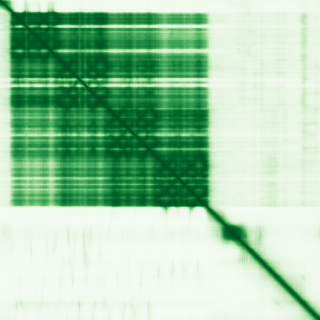
Mean pLDDT
73.4/ 100
Confident
650 residues
Confidence breakdown
- Very high(≥ 90)52%
- Confident(70–90)11%
- Low(50–70)6%
- Very low(< 50)32%
AlphaFold (Jumper et al., 2021) · CC BY 4.0
leukocyte immunoglobulin like receptor B1
Annotations refreshed 9 hours ago.
Moderate Evidence (Amber)
COVID-19 research
UnknownEpstein-Barr virus infection
response to stimulus
Miyoshi myopathy
neoplasm
gastric cancer
cancer
rheumatoid arthritis
systemic lupus erythematosus
acute myeloid leukemia
glioblastoma
Score is the Open Targets composite evidence score (0-1). Higher = stronger gene-disease association.
Leukocyte immunoglobulin-like receptor subfamily B member 1
Receptor for class I MHC antigens. Recognizes a broad spectrum of HLA-A, HLA-B, HLA-C, HLA-G and HLA-F alleles (PubMed:16455647, PubMed:28636952). Receptor for H301/UL18, a human cytomegalovirus class I MHC homolog. Ligand binding results in inhibitory signals and down-regulation of the immune response. Engagement of LILRB1 present on natural killer cells or T-cells by class I MHC molecules protects the target cells from lysis. Interaction with HLA-B or HLA-E leads to inhibition of FCER1A signaling and serotonin release. Inhibits FCGR1A-mediated phosphorylation of cellular proteins and mobilization of intracellular calcium ions (PubMed:11907092, PubMed:9285411, PubMed:9842885). Recognizes HLA-G in complex with B2M/beta-2 microglobulin and a nonamer self-peptide (PubMed:16455647). Upon interaction with peptide-bound HLA-G-B2M complex, triggers secretion of growth-promoting factors by decidual NK cells (PubMed:19304799, PubMed:29262349). Reprograms B cells toward an immune suppressive phenotype (PubMed:24453251)
LILRB1 · Q8NHL6

Mean pLDDT
73.4/ 100
Confident
650 residues
Confidence breakdown
AlphaFold (Jumper et al., 2021) · CC BY 4.0