
AlphaFold predicted structure
LITAF · Q99732
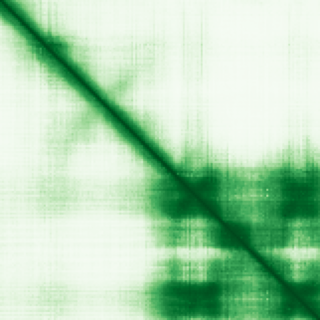
Mean pLDDT
69.6/ 100
Low
161 residues
Confidence breakdown
- Very high(≥ 90)25%
- Confident(70–90)27%
- Low(50–70)21%
- Very low(< 50)27%
Open interactive 3D viewer
AlphaFold (Jumper et al., 2021) · CC BY 4.0
lipopolysaccharide induced TNF factor
Annotations refreshed 2 months ago.
Diagnostic Grade (Green)
Hereditary neuropathy
MONOALLELIC, autosomal or pseudoautosomal, imprinted status unknownHereditary neuropathy or pain disorder
MONOALLELIC, autosomal or pseudoautosomal, imprinted status unknownIntellectual disability
MONOALLELIC, autosomal or pseudoautosomal, imprinted status unknownCharcot-Marie-Tooth disease type 1C
Charcot-Marie-Tooth disease
inflammatory bowel disease
hereditary disease
Crohn disease
cholelithiasis
alcohol drinking
ulcerative colitis
acute tonsillitis
liver disorder
Score is the Open Targets composite evidence score (0-1). Higher = stronger gene-disease association.
Lipopolysaccharide-induced tumor necrosis factor-alpha factor
Plays a role in endosomal protein trafficking and in targeting proteins for lysosomal degradation (PubMed:23166352). Plays a role in targeting endocytosed EGFR and ERGG3 for lysosomal degradation, and thereby helps down-regulate downstream signaling cascades (PubMed:23166352). Helps recruit the ESCRT complex components TSG101, HGS and STAM to cytoplasmic membranes (PubMed:23166352). Probably plays a role in regulating protein degradation via its interaction with NEDD4 (PubMed:15776429). May also contribute to the regulation of gene expression in the nucleus (PubMed:10200294, PubMed:15793005). Binds DNA (in vitro) and may play a synergistic role with STAT6 in the nucleus in regulating the expression of various cytokines (PubMed:15793005). May regulate the expression of numerous cytokines, such as TNF, CCL2, CCL5, CXCL1, IL1A and IL10 (PubMed:10200294, PubMed:15793005)
LITAF · Q99732
Mean pLDDT
69.6/ 100
Low
161 residues
Confidence breakdown
AlphaFold (Jumper et al., 2021) · CC BY 4.0