AlphaFold predicted structure
LMNB1 · P20700
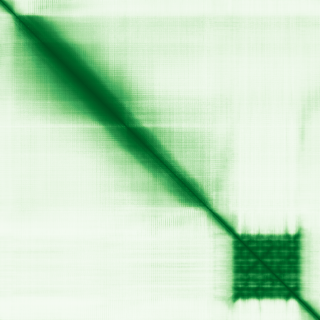
Mean pLDDT
82.4/ 100
Confident
586 residues
Confidence breakdown
- Very high(≥ 90)67%
- Confident(70–90)12%
- Low(50–70)4%
- Very low(< 50)18%
AlphaFold (Jumper et al., 2021) · CC BY 4.0
lamin B1
Annotations refreshed 10 hours ago.
Diagnostic Grade (Green)
Adult onset leukodystrophy
MONOALLELIC, autosomal or pseudoautosomal, imprinted status unknownDDG2P
MONOALLELIC, autosomal or pseudoautosomal, imprinted status unknownFetal anomalies
MONOALLELIC, autosomal or pseudoautosomal, NOT imprintedInherited white matter disorders
MONOALLELIC, autosomal or pseudoautosomal, imprinted status unknownIntellectual disability
MONOALLELIC, autosomal or pseudoautosomal, imprinted status unknownSevere microcephaly
MONOALLELIC, autosomal or pseudoautosomal, imprinted status unknownWhite matter disorders and cerebral calcification - narrow panel
MONOALLELIC, autosomal or pseudoautosomal, imprinted status unknownEarly onset or syndromic epilepsy
MONOALLELIC, autosomal or pseudoautosomal, imprinted status unknownmicrocephaly 26, primary, autosomal dominant
Autosomal dominant microcephaly
Adult-onset autosomal dominant leukodystrophy
adult-onset autosomal dominant demyelinating leukodystrophy
hereditary disease
Syndrome with microcephaly as major feature
Alzheimer disease
neurodegenerative disease
autosomal dominant primary microcephaly
hypothyroidism
Score is the Open Targets composite evidence score (0-1). Higher = stronger gene-disease association.
Lamin-B1
Lamins are intermediate filament proteins that assemble into a filamentous meshwork, and which constitute the major components of the nuclear lamina, a fibrous layer on the nucleoplasmic side of the inner nuclear membrane (PubMed:28716252, PubMed:32910914). Lamins provide a framework for the nuclear envelope, bridging the nuclear envelope and chromatin, thereby playing an important role in nuclear assembly, chromatin organization, nuclear membrane and telomere dynamics (PubMed:28716252, PubMed:32910914). The structural integrity of the lamina is strictly controlled by the cell cycle, as seen by the disintegration and formation of the nuclear envelope in prophase and telophase, respectively (PubMed:28716252, PubMed:32910914). Plays a role in sperm morphological development during late stages of spermiogenesis, particularly the anchoring of the sperm head to the tail (PubMed:38870534). Component of the LMNB1/SUN5/SEPT12 bridge that connects the sperm proximal centriole to the implantation fossa, the bridge functions to prevent detachment of the proximal centriole from the posterior nucleus during spermiogenesis (PubMed:38870534)
LMNB1 · P20700

Mean pLDDT
82.4/ 100
Confident
586 residues
Confidence breakdown
AlphaFold (Jumper et al., 2021) · CC BY 4.0