
AlphaFold predicted structure
LOXL3 · P58215
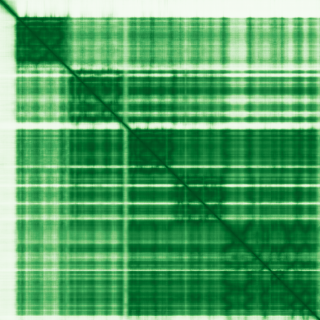
Mean pLDDT
84.0/ 100
Confident
753 residues
Confidence breakdown
- Very high(≥ 90)57%
- Confident(70–90)29%
- Low(50–70)5%
- Very low(< 50)9%
Open interactive 3D viewer
AlphaFold (Jumper et al., 2021) · CC BY 4.0
lysyl oxidase like 3
Annotations refreshed 3 months ago.
Moderate Evidence (Amber)
Clefting
BIALLELIC, autosomal or pseudoautosomalMonogenic hearing loss
BIALLELIC, autosomal or pseudoautosomalRetinal disorders
BIALLELIC, autosomal or pseudoautosomalSkeletal dysplasia
BIALLELIC, autosomal or pseudoautosomalStickler syndrome
BIALLELIC, autosomal or pseudoautosomalmyopia 28, autosomal recessive
3-methylglutaconic aciduria type 8
Stickler syndrome
Stickler syndrom, recessive
neurodegenerative disease
hereditary disease
Stickler syndrome type 1
Leigh syndrome
autism
melanoma
Score is the Open Targets composite evidence score (0-1). Higher = stronger gene-disease association.
Lysyl oxidase homolog 3
Protein-lysine 6-oxidase that mediates the oxidation of peptidyl lysine residues to allysine in target proteins (PubMed:17018530, PubMed:28065600). Catalyzes the post-translational oxidative deamination of peptidyl lysine residues in precursors of elastin and different types of collagens, a prerequisite in the formation of cross-links between collagens and elastin (PubMed:17018530). Required for somite boundary formation by catalyzing oxidation of fibronectin (FN1), enhancing integrin signaling in myofibers and their adhesion to the myotendinous junction (MTJ) (By similarity). Acts as a regulator of inflammatory response by inhibiting differentiation of naive CD4(+) T-cells into T-helper Th17 or regulatory T-cells (Treg): acts by interacting with STAT3 in the nucleus and catalyzing both deacetylation and oxidation of lysine residues on STAT3, leading to disrupt STAT3 dimerization and inhibit STAT3 transcription activity (PubMed:28065600). Oxidation of lysine residues to allysine on STAT3 preferentially takes place on lysine residues that are acetylated (PubMed:28065600). Also able to catalyze deacetylation of lysine residues on STAT3 (PubMed:28065600)
LOXL3 · P58215
Mean pLDDT
84.0/ 100
Confident
753 residues
Confidence breakdown
AlphaFold (Jumper et al., 2021) · CC BY 4.0