
AlphaFold predicted structure
LRAT · O95237
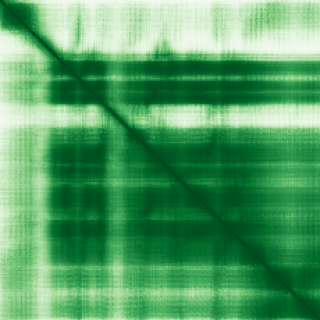
Mean pLDDT
83.3/ 100
Confident
230 residues
Confidence breakdown
- Very high(≥ 90)49%
- Confident(70–90)34%
- Low(50–70)6%
- Very low(< 50)12%
Open interactive 3D viewer
AlphaFold (Jumper et al., 2021) · CC BY 4.0
lecithin retinol acyltransferase
Annotations refreshed 2 months ago.
Diagnostic Grade (Green)
DDG2P
BIALLELIC, autosomal or pseudoautosomalRetinal disorders
BIALLELIC, autosomal or pseudoautosomalFetal anomalies
BIALLELIC, autosomal or pseudoautosomalGlaucoma (developmental)
Intellectual disability
BIALLELIC, autosomal or pseudoautosomalOphthalmological ciliopathies
Primary ciliary disorders
Rare multisystem ciliopathy disorders
+3 more panels — install the extension to see the full list inline on any page.
Leber congenital amaurosis
Leber congenital amaurosis 14
retinitis pigmentosa
severe early-childhood-onset retinal dystrophy
neurodegenerative disease
Retinal dystrophy
autosomal recessive retinitis pigmentosa
Stargardt disease
Leber congenital amaurosis 9
Leber congenital amaurosis 4
Score is the Open Targets composite evidence score (0-1). Higher = stronger gene-disease association.
Lecithin retinol acyltransferase
Transfers the acyl group from the sn-1 position of phosphatidylcholine to all-trans retinol, producing all-trans retinyl esters (PubMed:9920938). Retinyl esters are storage forms of vitamin A (Probable). LRAT plays a critical role in vision (Probable). It provides the all-trans retinyl ester substrates for the isomerohydrolase which processes the esters into 11-cis-retinol in the retinal pigment epithelium; due to a membrane-associated alcohol dehydrogenase, 11 cis-retinol is oxidized and converted into 11-cis-retinaldehyde which is the chromophore for rhodopsin and the cone photopigments (Probable). Required for the survival of cone photoreceptors and correct rod photoreceptor cell morphology (By similarity)
Curated MONDO disease pages that list LRAT among their top associated genes.
LRAT · O95237
Mean pLDDT
83.3/ 100
Confident
230 residues
Confidence breakdown
AlphaFold (Jumper et al., 2021) · CC BY 4.0