Skip to content
GenoLensGenoLens

LRRC32

Chr 11q13.5

leucine rich repeat containing 32

MANE:
ENST00000260061.9

Annotations refreshed 9 hours ago.

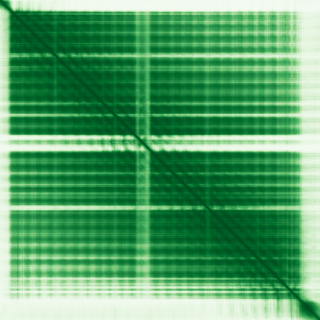
Predicted protein structure

Clinical relevance (Genomics England PanelApp)

Diagnostic Grade (Green)

  • Fetal anomalies

    BIALLELIC, autosomal or pseudoautosomal
  • Clefting

    BIALLELIC, autosomal or pseudoautosomal
  • Intellectual disability

    BIALLELIC, autosomal or pseudoautosomal
  • Retinal disorders

    BIALLELIC, autosomal or pseudoautosomal
  • Primary immunodeficiency or monogenic inflammatory bowel disease

    Unknown

Disease associations (Open Targets)

  • cleft palate, proliferative retinopathy, and developmental delay

    0.62
  • asthma

    0.50
  • Hepatitis

    0.34
  • Allergy

    0.34
  • bacterial pneumonia

    0.29
  • herpes zoster

    0.28
  • cleft palate

    0.28
  • Global developmental delay

    0.26
  • Vitreoretinopathy

    0.26
  • Eczematoid dermatitis

    0.21

Score is the Open Targets composite evidence score (0-1). Higher = stronger gene-disease association.

Protein function (UniProt)

Transforming growth factor beta activator LRRC32

Key regulator of transforming growth factor beta (TGFB1, TGFB2 and TGFB3) that controls TGF-beta activation by maintaining it in a latent state during storage in extracellular space (PubMed:19651619, PubMed:19750484, PubMed:22278742). Associates specifically via disulfide bonds with the Latency-associated peptide (LAP), which is the regulatory chain of TGF-beta, and regulates integrin-dependent activation of TGF-beta (PubMed:22278742). Able to outcompete LTBP1 for binding to LAP regulatory chain of TGF-beta (PubMed:22278742). Controls activation of TGF-beta-1 (TGFB1) on the surface of activated regulatory T-cells (Tregs) (PubMed:19651619, PubMed:19750484). Required for epithelial fusion during palate development by regulating activation of TGF-beta-3 (TGFB3) (By similarity)

Data sources: HGNC (CC BY 4.0), AlphaFold (CC BY 4.0, Jumper et al. Nature 2021), Genomics England PanelApp (CC BY 4.0), ClinGen, Open Targets (CC0), UniProt.

Not for sole clinical decision-making. Always verify against primary sources.