
AlphaFold predicted structure
LTBP1 · Q14766
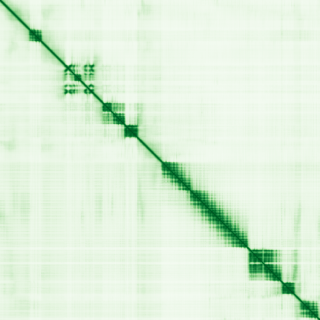
Mean pLDDT
58.9/ 100
Low
1,721 residues
Confidence breakdown
- Very high(≥ 90)1%
- Confident(70–90)48%
- Low(50–70)10%
- Very low(< 50)41%
Open interactive 3D viewer
AlphaFold (Jumper et al., 2021) · CC BY 4.0
latent transforming growth factor beta binding protein 1
Annotations refreshed 2 months ago.
Diagnostic Grade (Green)
DDG2P
BIALLELIC, autosomal or pseudoautosomalFetal anomalies
BIALLELIC, autosomal or pseudoautosomalLimb disorders
BIALLELIC, autosomal or pseudoautosomalRare syndromic craniosynostosis or isolated multisuture synostosis
BIALLELIC, autosomal or pseudoautosomalSkeletal dysplasia
BIALLELIC, autosomal or pseudoautosomalEhlers Danlos syndrome with a likely monogenic cause
BIALLELIC, autosomal or pseudoautosomalautosomal recessive cutis laxa type 2
Abnormality of the skeletal system
diverticular disease
osteoarthritis, knee
osteoarthritis, hip
arthropathy
osteoarthritis
carpal tunnel syndrome
autosomal recessive cutis laxa type 1
craniosynostosis
Score is the Open Targets composite evidence score (0-1). Higher = stronger gene-disease association.
Latent-transforming growth factor beta-binding protein 1
Key regulator of transforming growth factor beta (TGFB1, TGFB2 and TGFB3) that controls TGF-beta activation by maintaining it in a latent state during storage in extracellular space (PubMed:2022183, PubMed:8617200, PubMed:8939931). Associates specifically via disulfide bonds with the Latency-associated peptide (LAP), which is the regulatory chain of TGF-beta, and regulates integrin-dependent activation of TGF-beta (PubMed:15184403, PubMed:8617200, PubMed:8939931). Outcompeted by LRRC32/GARP for binding to LAP regulatory chain of TGF-beta (PubMed:22278742)
Curated MONDO disease pages that list LTBP1 among their top associated genes.
LTBP1 · Q14766
Mean pLDDT
58.9/ 100
Low
1,721 residues
Confidence breakdown
AlphaFold (Jumper et al., 2021) · CC BY 4.0