
AlphaFold predicted structure
LTBP3 · Q9NS15
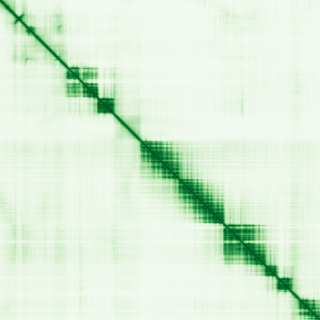
Mean pLDDT
63.8/ 100
Low
1,303 residues
Confidence breakdown
- Very high(≥ 90)1%
- Confident(70–90)52%
- Low(50–70)16%
- Very low(< 50)32%
Open interactive 3D viewer
AlphaFold (Jumper et al., 2021) · CC BY 4.0
latent transforming growth factor beta binding protein 3
Annotations refreshed 2 months ago.
Diagnostic Grade (Green)
Amelogenesis imperfecta
BIALLELIC, autosomal or pseudoautosomalDDG2P
BIALLELIC, autosomal or pseudoautosomalFetal anomalies
BOTH monoallelic and biallelic, autosomal or pseudoautosomalSkeletal dysplasia
BOTH monoallelic and biallelic, autosomal or pseudoautosomalThoracic aortic aneurysm or dissection (GMS)
BIALLELIC, autosomal or pseudoautosomalBilateral congenital or childhood onset cataracts
Intellectual disability
BIALLELIC, autosomal or pseudoautosomalbrachyolmia-amelogenesis imperfecta syndrome
geleophysic dysplasia
osteoarthritis, hip
type 2 diabetes mellitus
diabetes mellitus
gout
otosclerosis
Acromicric dysplasia
glaucoma
adult onset asthma
Score is the Open Targets composite evidence score (0-1). Higher = stronger gene-disease association.
Latent-transforming growth factor beta-binding protein 2
May play an integral structural role in elastic-fiber architectural organization and/or assembly
LTBP3 · Q9NS15
Mean pLDDT
63.8/ 100
Low
1,303 residues
Confidence breakdown
AlphaFold (Jumper et al., 2021) · CC BY 4.0