
AlphaFold predicted structure
LYRM7 · Q5U5X0
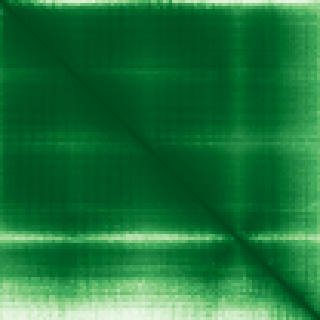
Mean pLDDT
91.8/ 100
Very high
104 residues
Confidence breakdown
- Very high(≥ 90)75%
- Confident(70–90)21%
- Low(50–70)3%
- Very low(< 50)1%
Open interactive 3D viewer
AlphaFold (Jumper et al., 2021) · CC BY 4.0
LYR motif containing 7
Annotations refreshed 2 months ago.
Diagnostic Grade (Green)
Inherited white matter disorders
BIALLELIC, autosomal or pseudoautosomalIntellectual disability
BIALLELIC, autosomal or pseudoautosomalLikely inborn error of metabolism
BIALLELIC, autosomal or pseudoautosomalMitochondrial disorder with complex III deficiency
BIALLELIC, autosomal or pseudoautosomalMitochondrial disorders
BIALLELIC, autosomal or pseudoautosomalPossible mitochondrial disorder - nuclear genes
BIALLELIC, autosomal or pseudoautosomalWhite matter disorders and cerebral calcification - narrow panel
BIALLELIC, autosomal or pseudoautosomalPaediatric or syndromic cardiomyopathy
BIALLELIC, autosomal or pseudoautosomalIsolated CoQ-cytochrome C reductase deficiency
mitochondrial complex III deficiency
mitochondrial disease
inborn mitochondrial metabolism disorder
mitochondrial complex III deficiency nuclear type 1
Varicose veins
asthma
Abnormality of the skeletal system
chronic rhinosinusitis
diabetic ketoacidosis
Score is the Open Targets composite evidence score (0-1). Higher = stronger gene-disease association.
Complex III assembly factor LYRM7
Assembly factor required for Rieske Fe-S protein UQCRFS1 incorporation into the cytochrome b-c1 (CIII) complex. Functions as a chaperone, binding to this subunit within the mitochondrial matrix and stabilizing it prior to its translocation and insertion into the late CIII dimeric intermediate within the mitochondrial inner membrane
LYRM7 · Q5U5X0
Mean pLDDT
91.8/ 100
Very high
104 residues
Confidence breakdown
AlphaFold (Jumper et al., 2021) · CC BY 4.0