
AlphaFold predicted structure
MAFB · Q9Y5Q3
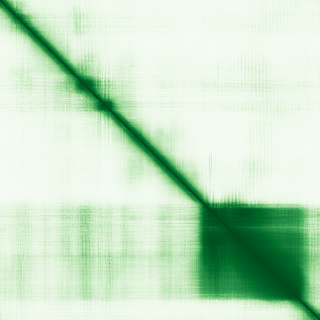
Mean pLDDT
62.6/ 100
Low
323 residues
Confidence breakdown
- Very high(≥ 90)28%
- Confident(70–90)3%
- Low(50–70)22%
- Very low(< 50)46%
Open interactive 3D viewer
AlphaFold (Jumper et al., 2021) · CC BY 4.0
MAF bZIP transcription factor B
Annotations refreshed 2 months ago.
Diagnostic Grade (Green)
DDG2P
MONOALLELIC, autosomal or pseudoautosomal, imprinted status unknownFetal anomalies
MONOALLELIC, autosomal or pseudoautosomal, imprinted status unknownSkeletal dysplasia
MONOALLELIC, autosomal or pseudoautosomal, NOT imprintedIntellectual disability
MONOALLELIC, autosomal or pseudoautosomal, imprinted status unknownMonogenic hearing loss
Osteogenesis imperfecta
Proteinuric renal disease
multicentric carpo-tarsal osteolysis with or without nephropathy
Duane retraction syndrome 3 with or without deafness
Duane retraction syndrome
Dupuytren Contracture
neurodegenerative disease
palmar fibromatosis
hereditary disease
hyperparathyroidism
parathyroid gland disorder
fasciitis
Score is the Open Targets composite evidence score (0-1). Higher = stronger gene-disease association.
Transcription factor MafB
Acts as a transcriptional activator or repressor (PubMed:27181683). Plays a pivotal role in regulating lineage-specific hematopoiesis by repressing ETS1-mediated transcription of erythroid-specific genes in myeloid cells. Required for monocytic, macrophage, osteoclast, podocyte and islet beta cell differentiation. Involved in renal tubule survival and F4/80 maturation. Activates the insulin and glucagon promoters. Together with PAX6, transactivates weakly the glucagon gene promoter through the G1 element. SUMO modification controls its transcriptional activity and ability to specify macrophage fate. Binds element G1 on the glucagon promoter (By similarity). Involved either as an oncogene or as a tumor suppressor, depending on the cell context. Required for the transcriptional activation of HOXB3 in the rhombomere r5 in the hindbrain (By similarity)
MAFB · Q9Y5Q3
Mean pLDDT
62.6/ 100
Low
323 residues
Confidence breakdown
AlphaFold (Jumper et al., 2021) · CC BY 4.0