
AlphaFold predicted structure
MAG · P20916
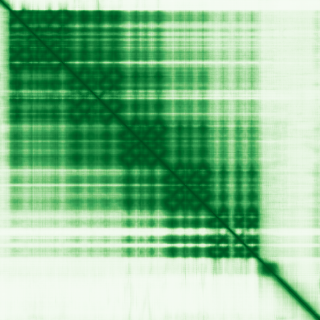
Mean pLDDT
80.8/ 100
Confident
626 residues
Confidence breakdown
- Very high(≥ 90)62%
- Confident(70–90)16%
- Low(50–70)4%
- Very low(< 50)18%
Open interactive 3D viewer
AlphaFold (Jumper et al., 2021) · CC BY 4.0
myelin associated glycoprotein
Annotations refreshed 2 months ago.
Diagnostic Grade (Green)
Ataxia and cerebellar anomalies - narrow panel
BIALLELIC, autosomal or pseudoautosomalChildhood onset hereditary spastic paraplegia
BIALLELIC, autosomal or pseudoautosomalHereditary neuropathy or pain disorder
BIALLELIC, autosomal or pseudoautosomalHereditary spastic paraplegia
BIALLELIC, autosomal or pseudoautosomalIntellectual disability
BIALLELIC, autosomal or pseudoautosomalOptic neuropathy
BIALLELIC, autosomal or pseudoautosomalAdult onset hereditary spastic paraplegia
BIALLELIC, autosomal or pseudoautosomalAdult onset neurodegenerative disorder
BIALLELIC, autosomal or pseudoautosomalAutosomal recessive spastic paraplegia type 75
complex hereditary spastic paraplegia
orofacial cleft 1
hereditary disease
diabetes mellitus
hereditary spastic paraplegia
chronic inflammatory demyelinating polyradiculoneuropathy
neuropathy
Stroke
Parkinson disease
Score is the Open Targets composite evidence score (0-1). Higher = stronger gene-disease association.
Myelin-associated glycoprotein
Adhesion molecule that mediates interactions between myelinating cells and neurons by binding to neuronal sialic acid-containing gangliosides and to the glycoproteins RTN4R and RTN4RL2 (By similarity). Not required for initial myelination, but seems to play a role in the maintenance of normal axon myelination. Protects motoneurons against apoptosis, also after injury; protection against apoptosis is probably mediated via interaction with neuronal RTN4R and RTN4RL2. Required to prevent degeneration of myelinated axons in adults; this probably depends on binding to gangliosides on the axon cell membrane (By similarity). Negative regulator of neurite outgrowth; in dorsal root ganglion neurons the inhibition is mediated primarily via binding to neuronal RTN4R or RTN4RL2 and to a lesser degree via binding to neuronal gangliosides. In cerebellar granule cells the inhibition is mediated primarily via binding to neuronal gangliosides. In sensory neurons, inhibition of neurite extension depends only partially on RTN4R, RTN4RL2 and gangliosides. Inhibits axon longitudinal growth (By similarity). Inhibits axon outgrowth by binding to RTN4R (By similarity). Preferentially binds to alpha-2,3-linked sialic acid. Binds ganglioside Gt1b (By similarity)
MAG · P20916
Mean pLDDT
80.8/ 100
Confident
626 residues
Confidence breakdown
AlphaFold (Jumper et al., 2021) · CC BY 4.0