Skip to content
GenoLensGenoLens

MAGEL2

Chr 15q11.2

MAGE family member L2

Aliases:
nM15
MANE:
ENST00000650528.1

Annotations refreshed 10 hours ago.

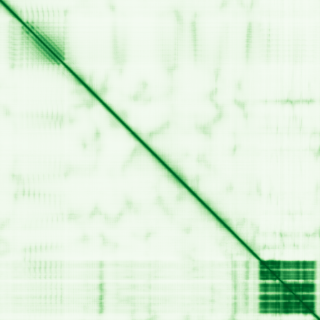
Predicted protein structure

Clinical relevance (Genomics England PanelApp)

Diagnostic Grade (Green)

  • Arthrogryposis

    MONOALLELIC, autosomal or pseudoautosomal, maternally imprinted (paternal allele expressed)
  • Congenital hyperinsulinism

    MONOALLELIC, autosomal or pseudoautosomal, maternally imprinted (paternal allele expressed)
  • DDG2P

    MONOALLELIC, autosomal or pseudoautosomal, maternally imprinted (paternal allele expressed)
  • Fetal anomalies

    MONOALLELIC, autosomal or pseudoautosomal, maternally imprinted (paternal allele expressed)
  • Intellectual disability

    MONOALLELIC, autosomal or pseudoautosomal, maternally imprinted (paternal allele expressed)
  • Clefting

    MONOALLELIC, autosomal or pseudoautosomal, NOT imprinted
  • Pituitary hormone deficiency

    MONOALLELIC, autosomal or pseudoautosomal, paternally imprinted (maternal allele expressed)
  • Severe early-onset obesity

Disease associations (Open Targets)

  • Schaaf-Yang syndrome

    0.79
  • Prader-Willi syndrome due to point mutation

    0.62
  • Prader-Willi syndrome

    0.60
  • hereditary disease

    0.53
  • developmental disability

    0.41
  • arthrogryposis multiplex congenita

    0.37
  • neurodevelopmental disorder

    0.37
  • Prader-Willi-like syndrome

    0.37
  • fetal akinesia deformation sequence

    0.37
  • fetal akinesia deformation sequence 1

    0.37

Score is the Open Targets composite evidence score (0-1). Higher = stronger gene-disease association.

Protein function (UniProt)

MAGE-like protein 2

Probably enhances ubiquitin ligase activity of RING-type zinc finger-containing E3 ubiquitin-protein ligases, possibly through recruitment and/or stabilization of the Ubl-conjugating enzyme (E2) at the E3:substrate complex. Acts as a regulator of retrograde transport via its interaction with VPS35. Recruited to retromer-containing endosomes and promotes the formation of 'Lys-63'-linked polyubiquitin chains at 'Lys-220' of WASHC1 together with TRIM27, leading to promote endosomal F-actin assembly (PubMed:23452853). Regulates the circadian clock by repressing the transcriptional activator activity of the CLOCK-BMAL1 heterodimer. Significantly promotes the cytoplasmic accumulation of CLOCK (By similarity)

Data sources: HGNC (CC BY 4.0), AlphaFold (CC BY 4.0, Jumper et al. Nature 2021), Genomics England PanelApp (CC BY 4.0), ClinGen, Open Targets (CC0), UniProt.

Not for sole clinical decision-making. Always verify against primary sources.