Skip to content
GenoLensGenoLens

MAP2K1

Chr 15q22.31

mitogen-activated protein kinase kinase 1

Aliases:
MEK1, MAPKK1, MKK1
MANE:
ENST00000307102.10

Annotations refreshed 1 month ago.

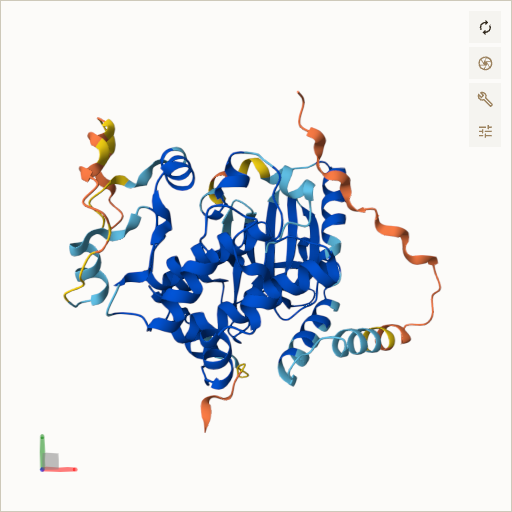
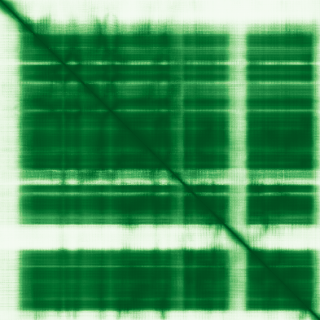
Predicted protein structure

Clinical relevance (Genomics England PanelApp)

Diagnostic Grade (Green)

  • Childhood solid tumours cancer susceptibility

    MONOALLELIC, autosomal or pseudoautosomal, imprinted status unknown
  • DDG2P

    MONOALLELIC, autosomal or pseudoautosomal, imprinted status unknown
  • Early onset or syndromic epilepsy

    MONOALLELIC, autosomal or pseudoautosomal, imprinted status unknown
  • Fetal anomalies

    MONOALLELIC, autosomal or pseudoautosomal, imprinted status unknown
  • Fetal hydrops

    MONOALLELIC, autosomal or pseudoautosomal, NOT imprinted
  • Intellectual disability

    MONOALLELIC, autosomal or pseudoautosomal, NOT imprinted
  • IUGR and IGF abnormalities

    MONOALLELIC, autosomal or pseudoautosomal, NOT imprinted
  • Monogenic short stature

    MONOALLELIC, autosomal or pseudoautosomal, NOT imprinted

+11 more panels — install the extension to see the full list inline on any page.

Disease associations (Open Targets)

  • cardiofaciocutaneous syndrome

    0.83
  • cardiofaciocutaneous syndrome 3

    0.81
  • melanoma

    0.73
  • melorheostosis

    0.72
  • cancer

    0.69
  • Noonan syndrome

    0.67
  • neoplasm

    0.60
  • RASopathy

    0.60
  • neurofibromatosis type 1

    0.57
  • Noonan syndrome with multiple lentigines

    0.55

Score is the Open Targets composite evidence score (0-1). Higher = stronger gene-disease association.

Protein function (UniProt)

Dual specificity mitogen-activated protein kinase kinase 1

Dual specificity protein kinase which acts as an essential component of the MAP kinase signal transduction pathway. Binding of extracellular ligands such as growth factors, cytokines and hormones to their cell-surface receptors activates RAS and this initiates RAF1 activation. RAF1 then further activates the dual-specificity protein kinases MAP2K1/MEK1 and MAP2K2/MEK2. Both MAP2K1/MEK1 and MAP2K2/MEK2 function specifically in the MAPK/ERK cascade, and catalyze the concomitant phosphorylation of a threonine and a tyrosine residue in a Thr-Glu-Tyr sequence located in the extracellular signal-regulated kinases MAPK3/ERK1 and MAPK1/ERK2, leading to their activation and further transduction of the signal within the MAPK/ERK cascade. Activates BRAF in a KSR1 or KSR2-dependent manner; by binding to KSR1 or KSR2 releases the inhibitory intramolecular interaction between KSR1 or KSR2 protein kinase and N-terminal domains which promotes KSR1 or KSR2-BRAF dimerization and BRAF activation (PubMed:29433126). Depending on the cellular context, this pathway mediates diverse biological functions such as cell growth, adhesion, survival and differentiation, predominantly through the regulation of transcription, metabolism and cytoskeletal rearrangements. One target of the MAPK/ERK cascade is peroxisome proliferator-activated receptor gamma (PPARG), a nuclear receptor that promotes differentiation and apoptosis. MAP2K1/MEK1 has been shown to export PPARG from the nucleus. The MAPK/ERK cascade is also involved in the regulation of endosomal dynamics, including lysosome processing and endosome cycling through the perinuclear recycling compartment (PNRC), as well as in the fragmentation of the Golgi apparatus during mitosis

Curated MONDO disease pages that list MAP2K1 among their top associated genes.

Data sources: HGNC (CC BY 4.0), AlphaFold (CC BY 4.0, Jumper et al. Nature 2021), Genomics England PanelApp (CC BY 4.0), ClinGen, Open Targets (CC0), UniProt.

Not for sole clinical decision-making. Always verify against primary sources.