
AlphaFold predicted structure
MAST1 · Q9Y2H9
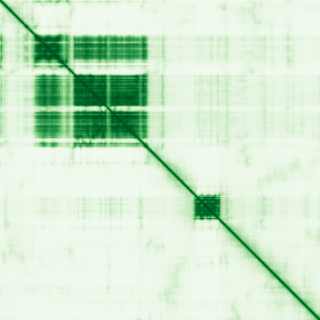
Mean pLDDT
53.2/ 100
Low
1,570 residues
Confidence breakdown
- Very high(≥ 90)17%
- Confident(70–90)15%
- Low(50–70)5%
- Very low(< 50)63%
Open interactive 3D viewer
AlphaFold (Jumper et al., 2021) · CC BY 4.0
microtubule associated serine/threonine kinase 1
Annotations refreshed 2 months ago.
Diagnostic Grade (Green)
DDG2P
MONOALLELIC, autosomal or pseudoautosomal, imprinted status unknownFetal anomalies
MONOALLELIC, autosomal or pseudoautosomal, NOT imprintedIntellectual disability
MONOALLELIC, autosomal or pseudoautosomal, imprinted status unknownEarly onset or syndromic epilepsy
MONOALLELIC, autosomal or pseudoautosomal, imprinted status unknownmega-corpus-callosum syndrome with cerebellar hypoplasia and cortical malformations
Cerebellar hypoplasia
neurodegenerative disease
hereditary disease
mathematical ability
Intellectual disability
cancer
non-small cell lung carcinoma
autosomal recessive primary microcephaly
Genetic central nervous system malformation
Score is the Open Targets composite evidence score (0-1). Higher = stronger gene-disease association.
Microtubule-associated serine/threonine-protein kinase 1
Microtubule-associated protein essential for correct brain development (PubMed:30449657). Appears to link the dystrophin/utrophin network with microtubule filaments via the syntrophins. Phosphorylation of DMD or UTRN may modulate their affinities for associated proteins (By similarity)
MAST1 · Q9Y2H9
Mean pLDDT
53.2/ 100
Low
1,570 residues
Confidence breakdown
AlphaFold (Jumper et al., 2021) · CC BY 4.0