
AlphaFold predicted structure
MC4R · P32245
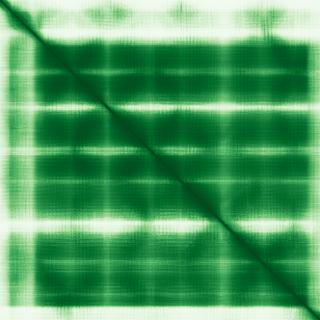
Mean pLDDT
80.1/ 100
Confident
332 residues
Confidence breakdown
- Very high(≥ 90)49%
- Confident(70–90)28%
- Low(50–70)9%
- Very low(< 50)14%
Open interactive 3D viewer
AlphaFold (Jumper et al., 2021) · CC BY 4.0
melanocortin 4 receptor
Annotations refreshed 2 months ago.
Diagnostic Grade (Green)
Paediatric disorders - additional genes
BOTH monoallelic and biallelic (but BIALLELIC mutations cause a more SEVERE disease form), autosomal or pseudoautosomalSevere early-onset obesity
BOTH monoallelic and biallelic (but BIALLELIC mutations cause a more SEVERE disease form), autosomal or pseudoautosomalobesity disorder
Obesity
Abnormality of the skeletal system
obesity due to melanocortin 4 receptor deficiency
type 2 diabetes mellitus
sexual dysfunction
Bardet-Biedl syndrome
diabetes mellitus
metabolic syndrome
overnutrition
Score is the Open Targets composite evidence score (0-1). Higher = stronger gene-disease association.
Melanocortin receptor 4
G protein-coupled receptor that binds melanocyte-stimulating hormones (alpha- and beta-MSH) and corticotropin/ACTH, which are peptide products of the POMC precursor (PubMed:12646665, PubMed:14764818, PubMed:25163632, PubMed:32327598, PubMed:33858992, PubMed:8392067). Functions as a central component of the leptin-melanocortin pathway, which is essential for maintaining energy homeostasis (PubMed:32327598, PubMed:33858992). Upon activation, couples to G(s) protein, stimulating adenylate cyclase and the cAMP-dependent signaling pathway, which promotes anorexogenic signaling in the hypothalamus and contributes to a negative energy balance (PubMed:12588803, PubMed:14764818, PubMed:25163632, PubMed:33858992). Regulates food intake: activation by agonists suppresses appetite, whereas the antagonist Agouti-related protein/AGRP precludes agonist-induced signaling, thereby stimulating appetite (PubMed:9311920, PubMed:29311635). Modulates the firing activity of neurons in paraventricular nucleus (PVN) of the hypothalamus via alpha-MSH and AGRP regulation of inwardly rectifying potassium channel KCNJ13 closure, independently of G(s) signaling (PubMed:32327598). In the PVN, also interacts with opsin 3/OPN3, which couples to G(i/o) proteins to inhibit MC4R-mediated cAMP signaling, thereby promoting food intake (PubMed:39951488). In intestinal epithelial cells, contributes to inhibition of hepatic glucose production via nesfatin-1/NUCB2, leading to increased cAMP levels and glucagon-like peptide 1 (GLP-1) secretion (PubMed:39562740). Interaction with MGRN1 displaces the G(s) protein, further decreasing MC4R signaling activity (PubMed:19737927). Also activated by gamma-MSH, though with low potency (PubMed:8392067)
Curated MONDO disease pages that list MC4R among their top associated genes.
MC4R · P32245
Mean pLDDT
80.1/ 100
Confident
332 residues
Confidence breakdown
AlphaFold (Jumper et al., 2021) · CC BY 4.0