
AlphaFold predicted structure
MDH2 · P40926
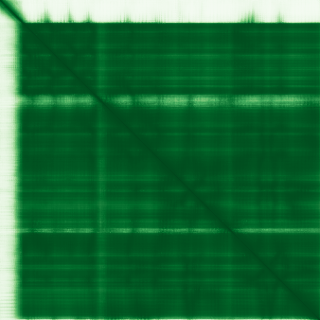
Mean pLDDT
93.4/ 100
Very high
338 residues
Confidence breakdown
- Very high(≥ 90)87%
- Confident(70–90)6%
- Low(50–70)2%
- Very low(< 50)6%
Open interactive 3D viewer
AlphaFold (Jumper et al., 2021) · CC BY 4.0
malate dehydrogenase 2
Annotations refreshed 2 months ago.
Diagnostic Grade (Green)
DDG2P
BIALLELIC, autosomal or pseudoautosomalEarly onset or syndromic epilepsy
BIALLELIC, autosomal or pseudoautosomalIntellectual disability
BIALLELIC, autosomal or pseudoautosomalLikely inborn error of metabolism
BIALLELIC, autosomal or pseudoautosomalMitochondrial disorders
BIALLELIC, autosomal or pseudoautosomalPossible mitochondrial disorder - nuclear genes
BIALLELIC, autosomal or pseudoautosomalFetal anomalies
BIALLELIC, autosomal or pseudoautosomalChildhood onset dystonia, chorea or related movement disorder
+2 more panels — install the extension to see the full list inline on any page.
developmental and epileptic encephalopathy, 51
hereditary disease
Infantile encephalopathy
hereditary pheochromocytoma-paraganglioma
atrial fibrillation
developmental and epileptic encephalopathy, 1
Spasticity - intellectual disability - X-linked epilepsy
substance-related disorder
opioid use disorder
hepatocellular carcinoma
Score is the Open Targets composite evidence score (0-1). Higher = stronger gene-disease association.
Malate dehydrogenase, mitochondrial
Mitochondrial malate dehydrogenase that catalyzes the reversible conversion of malate to oxaloacetate using NAD(+) as a cofactor (PubMed:27989324). Plays a central role in the tricarboxylic acid (TCA) cycle contributing to cellular respiration and energy production via the mitochondrial electron transport chain (PubMed:35366151). Also participates in the malate-aspartate NADH shuttle, facilitating transfer of reducing equivalents between cytosol and mitochondria to maintain redox balance (NAD(+)/NADH homeostasis) and support metabolic flux between compartments (By similarity). In addition to its metabolic role, binds to RNA in cells, associating with cytosolic RNAs including tRNAs and mRNAs (PubMed:38609156)
MDH2 · P40926
Mean pLDDT
93.4/ 100
Very high
338 residues
Confidence breakdown
AlphaFold (Jumper et al., 2021) · CC BY 4.0