
AlphaFold predicted structure
MEFV · O15553
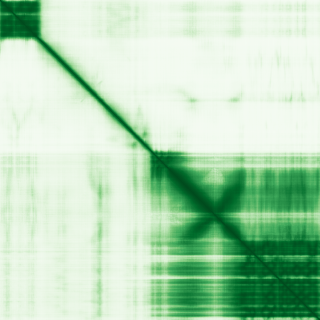
Mean pLDDT
72.3/ 100
Confident
781 residues
Confidence breakdown
- Very high(≥ 90)48%
- Confident(70–90)15%
- Low(50–70)2%
- Very low(< 50)35%
Open interactive 3D viewer
AlphaFold (Jumper et al., 2021) · CC BY 4.0
MEFV innate immunity regulator, pyrin
Annotations refreshed 2 months ago.
Diagnostic Grade (Green)
Autoinflammatory disorders
BOTH monoallelic and biallelic, autosomal or pseudoautosomalCOVID-19 research
BOTH monoallelic and biallelic, autosomal or pseudoautosomalGastrointestinal epithelial barrier disorders
BOTH monoallelic and biallelic, autosomal or pseudoautosomalInfantile enterocolitis & monogenic inflammatory bowel disease
BOTH monoallelic and biallelic, autosomal or pseudoautosomalPeriodic fever syndromes
BOTH monoallelic and biallelic, autosomal or pseudoautosomalPrimary immunodeficiency or monogenic inflammatory bowel disease
BOTH monoallelic and biallelic, autosomal or pseudoautosomalFamilial hidradenitis suppurativa
BOTH monoallelic and biallelic, autosomal or pseudoautosomalProteinuric renal disease
familial Mediterranean fever
autosomal recessive familial Mediterranean fever
sweet syndrome
autoinflammatory syndrome
hereditary disease
Behcet disease
Recurrent fever
Renal insufficiency
Abnormal heart morphology
neuronal ceroid lipofuscinosis
Score is the Open Targets composite evidence score (0-1). Higher = stronger gene-disease association.
Pyrin
Involved in the regulation of innate immunity and the inflammatory response in response to IFNG/IFN-gamma (PubMed:10807793, PubMed:11468188, PubMed:16037825, PubMed:16785446, PubMed:17431422, PubMed:17964261, PubMed:18577712, PubMed:19109554, PubMed:19584923, PubMed:26347139, PubMed:27030597, PubMed:28835462). Organizes autophagic machinery by serving as a platform for the assembly of ULK1, Beclin 1/BECN1, ATG16L1, and ATG8 family members and recognizes specific autophagy targets, thus coordinating target recognition with assembly of the autophagic apparatus and initiation of autophagy (PubMed:16785446, PubMed:17431422, PubMed:26347139). Acts as an autophagy receptor for the degradation of several inflammasome components, including CASP1, NLRP1 and NLRP3, hence preventing excessive IL1B- and IL18-mediated inflammation (PubMed:16785446, PubMed:17431422, PubMed:26347139). However, it can also have a positive effect in the inflammatory pathway, acting as an innate immune sensor that triggers PYCARD/ASC specks formation, caspase-1 activation, and IL1B and IL18 production (PubMed:16037825, PubMed:27030597, PubMed:28835462). Together with AIM2, also acts as a mediator of pyroptosis, necroptosis and apoptosis (PANoptosis), an integral part of host defense against pathogens, in response to bacterial infection (By similarity). It is required for PSTPIP1-induced PYCARD/ASC oligomerization and inflammasome formation (PubMed:10807793, PubMed:11468188, PubMed:17964261, PubMed:18577712, PubMed:19109554, PubMed:19584923). Recruits PSTPIP1 to inflammasomes, and is required for PSTPIP1 oligomerization (PubMed:10807793, PubMed:11468188, PubMed:17964261, PubMed:18577712, PubMed:19109554, PubMed:19584923)
MEFV · O15553
Mean pLDDT
72.3/ 100
Confident
781 residues
Confidence breakdown
AlphaFold (Jumper et al., 2021) · CC BY 4.0