
AlphaFold predicted structure
MEOX1 · P50221
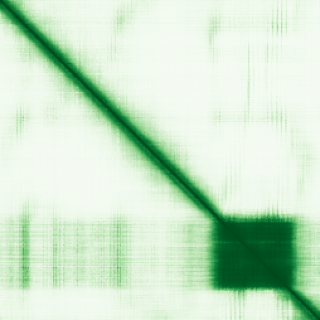
Mean pLDDT
62.5/ 100
Low
254 residues
Confidence breakdown
- Very high(≥ 90)21%
- Confident(70–90)4%
- Low(50–70)45%
- Very low(< 50)31%
Open interactive 3D viewer
AlphaFold (Jumper et al., 2021) · CC BY 4.0
mesenchyme homeobox 1
Annotations refreshed 2 months ago.
Diagnostic Grade (Green)
DDG2P
BIALLELIC, autosomal or pseudoautosomalFetal anomalies
BIALLELIC, autosomal or pseudoautosomalSkeletal dysplasia
BIALLELIC, autosomal or pseudoautosomalClefting
BIALLELIC, autosomal or pseudoautosomalFamilial Neural Tube Defects
Klippel-Feil syndrome 2, autosomal recessive
Cervical C2/C3 vertebral fusion
Klippel-Feil syndrome
Klippel-Feil syndrome 1, autosomal dominant
isolated Klippel-Feil syndrome
cervical carcinoma
bone fracture
mitral valve prolapse
Dupuytren Contracture
upper extremity fracture
Score is the Open Targets composite evidence score (0-1). Higher = stronger gene-disease association.
Homeobox protein MOX-1
Mesodermal transcription factor that plays a key role in somitogenesis and is specifically required for sclerotome development. Required for maintenance of the sclerotome polarity and formation of the cranio-cervical joints (PubMed:23290072, PubMed:24073994). Binds specifically to the promoter of target genes and regulates their expression. Activates expression of NKX3-2 in the sclerotome. Activates expression of CDKN1A and CDKN2A in endothelial cells, acting as a regulator of vascular cell proliferation. While it activates CDKN1A in a DNA-dependent manner, it activates CDKN2A in a DNA-independent manner. Required for hematopoietic stem cell (HSCs) induction via its role in somitogenesis: specification of HSCs occurs via the deployment of a specific endothelial precursor population, which arises within a sub-compartment of the somite named endotome
MEOX1 · P50221
Mean pLDDT
62.5/ 100
Low
254 residues
Confidence breakdown
AlphaFold (Jumper et al., 2021) · CC BY 4.0