
AlphaFold predicted structure
MESP2 · Q0VG99
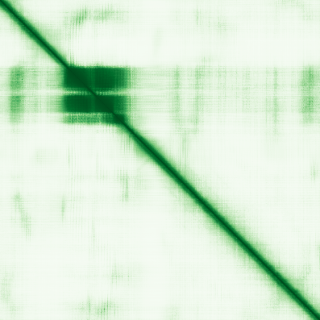
Mean pLDDT
54.2/ 100
Low
397 residues
Confidence breakdown
- Very high(≥ 90)12%
- Confident(70–90)7%
- Low(50–70)23%
- Very low(< 50)58%
Open interactive 3D viewer
AlphaFold (Jumper et al., 2021) · CC BY 4.0
mesoderm posterior bHLH transcription factor 2
Annotations refreshed 2 months ago.
Diagnostic Grade (Green)
DDG2P
BIALLELIC, autosomal or pseudoautosomalFetal anomalies
BIALLELIC, autosomal or pseudoautosomalSkeletal dysplasia
BIALLELIC, autosomal or pseudoautosomalFamilial Neural Tube Defects
Intellectual disability
BIALLELIC, autosomal or pseudoautosomalspondylocostal dysostosis 2, autosomal recessive
autosomal recessive spondylocostal dysostosis
spondylocostal dysostosis
neurodegenerative disease
spondylocostal dysostosis 1, autosomal recessive
hereditary disease
spondylolisthesis
Familial Scheuermann disease
Scheuermann disease
X-linked osteoporosis with fractures
Score is the Open Targets composite evidence score (0-1). Higher = stronger gene-disease association.
Mesoderm posterior protein 2
Transcription factor with important role in somitogenesis. Defines the rostrocaudal patterning of the somite by participating in distinct Notch pathways. Also regulates the FGF signaling pathway. Specifies the rostral half of the somites. Generates rostro-caudal polarity of somites by down-regulating in the presumptive rostral domain DLL1, a Notch ligand. Participates in the segment border formation by activating in the anterior presomitic mesoderm LFNG, a negative regulator of DLL1-Notch signaling. Acts as a strong suppressor of Notch activity. Together with MESP1 is involved in the epithelialization of somitic mesoderm and in the development of cardiac mesoderm
MESP2 · Q0VG99
Mean pLDDT
54.2/ 100
Low
397 residues
Confidence breakdown
AlphaFold (Jumper et al., 2021) · CC BY 4.0