Skip to content
GenoLensGenoLens

MGME1

Chr 20p11.23

mitochondrial genome maintenance exonuclease 1

Aliases:
bA504H3.4, DDK1
MANE:
ENST00000377710.10

Annotations refreshed 10 hours ago.

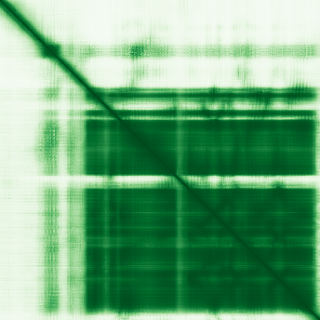
Predicted protein structure

Clinical relevance (Genomics England PanelApp)

Diagnostic Grade (Green)

  • Likely inborn error of metabolism

    BIALLELIC, autosomal or pseudoautosomal
  • Mitochondrial disorders

    BIALLELIC, autosomal or pseudoautosomal
  • Mitochondrial DNA maintenance disorder

    BIALLELIC, autosomal or pseudoautosomal
  • Possible mitochondrial disorder - nuclear genes

    BIALLELIC, autosomal or pseudoautosomal
  • Undiagnosed metabolic disorders

    BIALLELIC, autosomal or pseudoautosomal
  • Childhood onset dystonia, chorea or related movement disorder

Disease associations (Open Targets)

  • mitochondrial DNA depletion syndrome 11

    0.73
  • Progressive external ophthalmoplegia - myopathy - emaciation

    0.63
  • inborn mitochondrial metabolism disorder

    0.37
  • mitochondrial disease

    0.37
  • hereditary disease

    0.19
  • hypothyroidism

    0.14
  • Parkinson disease

    0.14
  • Hypercholesterolemia

    0.13
  • metabolic disease

    0.12
  • myxedema

    0.11

Score is the Open Targets composite evidence score (0-1). Higher = stronger gene-disease association.

Protein function (UniProt)

Mitochondrial genome maintenance exonuclease 1

Metal-dependent single-stranded DNA (ssDNA) exonuclease involved in mitochondrial genome maintenance. Has preference for 5'-3' exonuclease activity but is also capable of endonuclease activity on linear substrates. Necessary for maintenance of proper 7S DNA levels. Probably involved in mitochondrial DNA (mtDNA) repair, possibly via the processing of displaced DNA containing Okazaki fragments during RNA-primed DNA synthesis on the lagging strand or via processing of DNA flaps during long-patch base excision repair. Specifically binds 5-hydroxymethylcytosine (5hmC)-containing DNA in stem cells

Data sources: HGNC (CC BY 4.0), AlphaFold (CC BY 4.0, Jumper et al. Nature 2021), Genomics England PanelApp (CC BY 4.0), ClinGen, Open Targets (CC0), UniProt.

Not for sole clinical decision-making. Always verify against primary sources.