Skip to content
GenoLensGenoLens

MMACHC

Chr 1p34.1

metabolism of cobalamin associated C

Aliases:
DKFZP564I122, cblC
MANE:
ENST00000401061.9

Annotations refreshed 1 month ago.

Predicted protein structure

Clinical relevance (Genomics England PanelApp)

Diagnostic Grade (Green)

  • Ataxia and cerebellar anomalies - narrow panel

    BIALLELIC, autosomal or pseudoautosomal
  • Atypical haemolytic uraemic syndrome

    BIALLELIC, autosomal or pseudoautosomal
  • DDG2P

    BIALLELIC, autosomal or pseudoautosomal
  • Early onset or syndromic epilepsy

    BIALLELIC, autosomal or pseudoautosomal
  • Fetal anomalies

    BIALLELIC, autosomal or pseudoautosomal
  • Hereditary ataxia

    BIALLELIC, autosomal or pseudoautosomal
  • Hereditary ataxia with onset in adulthood

    BIALLELIC, autosomal or pseudoautosomal
  • Hereditary neuropathy

    BIALLELIC, autosomal or pseudoautosomal

+10 more panels — install the extension to see the full list inline on any page.

Disease associations (Open Targets)

  • Methylmalonic acidemia with homocystinuria, type cblC

    0.85
  • methylmalonic aciduria and homocystinuria type cblC

    0.84
  • Methylmalonic acidemia with homocystinuria

    0.82
  • hereditary disease

    0.50
  • disorders of vitamin D metabolism

    0.45
  • methylmalonic aciduria due to methylmalonyl-CoA mutase deficiency

    0.42
  • Methylmalonic aciduria

    0.38
  • Abnormality of metabolism/homeostasis

    0.34
  • methylmalonic aciduria and homocystinuria

    0.34
  • methylmalonic aciduria and homocystinuria type cblD

    0.34

Score is the Open Targets composite evidence score (0-1). Higher = stronger gene-disease association.

Protein function (UniProt)

Cyanocobalamin reductase / alkylcobalamin dealkylase

Cobalamin (vitamin B12) cytosolic chaperone that catalyzes the reductive decyanation of cyanocob(III)alamin (cyanocobalamin, CNCbl) to yield cob(II)alamin and cyanide, using FAD or FMN as cofactors and NADPH as cosubstrate (PubMed:18779575, PubMed:19700356, PubMed:21697092, PubMed:25809485). Cyanocobalamin constitutes the inactive form of vitamin B12 introduced from the diet, and is converted into the active cofactors methylcobalamin (MeCbl) involved in methionine biosynthesis, and 5'-deoxyadenosylcobalamin (AdoCbl) involved in the TCA cycle (PubMed:19801555). Forms a complex with the lysosomal transporter ABCD4 and its chaperone LMBRD1, to transport cobalamin across the lysosomal membrane into the cytosol (PubMed:25535791). The processing of cobalamin in the cytosol occurs in a multiprotein complex composed of at least MMACHC, MMADHC, MTRR (methionine synthase reductase) and MTR (methionine synthase) which may contribute to shuttle safely and efficiently cobalamin towards MTR in order to produce methionine (PubMed:21071249, PubMed:27771510). Also acts as a glutathione transferase by catalyzing the dealkylation of the alkylcob(III)alamins MeCbl and AdoCbl, using the thiolate of glutathione for nucleophilic displacement to generate cob(I)alamin and the corresponding glutathione thioether (PubMed:19801555, PubMed:21697092, PubMed:22642810, PubMed:25809485). The conversion of incoming MeCbl or AdoCbl into a common intermediate cob(I)alamin is necessary to meet the cellular needs for both cofactors (PubMed:19801555). Cysteine and homocysteine cannot substitute for glutathione in this reaction (PubMed:19801555)

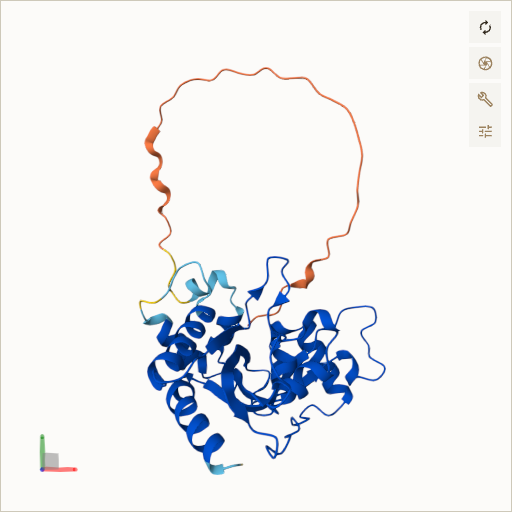
Data sources: HGNC (CC BY 4.0), AlphaFold (CC BY 4.0, Jumper et al. Nature 2021), Genomics England PanelApp (CC BY 4.0), ClinGen, Open Targets (CC0), UniProt.

Not for sole clinical decision-making. Always verify against primary sources.