
AlphaFold predicted structure
MPO · P05164
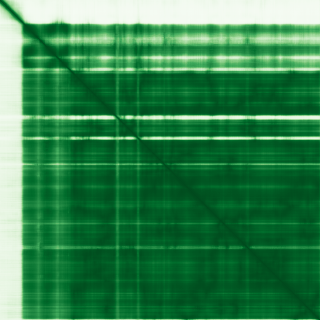
Mean pLDDT
89.0/ 100
Confident
745 residues
Confidence breakdown
- Very high(≥ 90)76%
- Confident(70–90)14%
- Low(50–70)3%
- Very low(< 50)7%
Open interactive 3D viewer
AlphaFold (Jumper et al., 2021) · CC BY 4.0
myeloperoxidase
Annotations refreshed 3 months ago.
Diagnostic Grade (Green)
COVID-19 research
BIALLELIC, autosomal or pseudoautosomalPrimary immunodeficiency or monogenic inflammatory bowel disease
BIALLELIC, autosomal or pseudoautosomalDilated Cardiomyopathy and conduction defects
BOTH monoallelic and biallelic, autosomal or pseudoautosomalmyeloperoxidase deficiency
Alzheimer disease type 1
multiple system atrophy
amyotrophic lateral sclerosis
Alzheimer disease
Abnormality of the skeletal system
Parkinson disease
coronary artery disorder
neoplasm
ganglioneuroma
Score is the Open Targets composite evidence score (0-1). Higher = stronger gene-disease association.
Myeloperoxidase
Peroxidase that plays a central role in the host defense system of polymorphonuclear leukocytes by mediating both (1) formation of neutrophil extracellular trap (NETs) and (2) microbicidal activity (PubMed:16125131, PubMed:17438335, PubMed:20974672, PubMed:20974816, PubMed:22131345, PubMed:25066128, PubMed:28574339, PubMed:40963017, PubMed:4978299, PubMed:6295491). Promotes NET formation by mediating chromatin disassembly: translocates to the nucleus and specifically binds to nucleosomes, both as monomer and homodimer, leading to nucleosome unstacking and initial chromatin decondensation (PubMed:40963017). Homodimers clash with one end of the nucleosomal DNA, leading to DNA unwrapping, initiating complete disassembly of nucleosomes and chromatin transformation into NETs in an ATP-independent manner (PubMed:40963017). NETs, which are mainly composed of DNA fibers and globular proteins, are then extruded into the extracellular space by neutrophils to trap pathogens and release antimicrobial proteins to destroy them (PubMed:40963017). Participates to the microbicidal activity against a wide range of organisms by acting as a peroxidase that catalyzes the formation of oxidants in presence of hydrogen peroxide (PubMed:16125131, PubMed:17074761, PubMed:17438335, PubMed:21880720, PubMed:22131345, PubMed:22352991, PubMed:22902565, PubMed:24194519, PubMed:33273015, PubMed:9359420, PubMed:9922160). Mediates the formation of hypohalous acids, mainly hypochlorous acid (HOCl) in physiologic situations, that greatly enhance polymorphonuclear leukocyte microbicidal activity (PubMed:16125131, PubMed:17074761, PubMed:17438335, PubMed:19608745, PubMed:21880720, PubMed:22902565, PubMed:24194519, PubMed:9359420, PubMed:9922160). In addition to hypochlorous acid, catalyzes formation of hypobromous acid (HOBr), hypoiodous acid (HOI) and hypothiocyanous acid (HOSCN) (PubMed:1318692, PubMed:16125131, PubMed:17438335, PubMed:19608745, PubMed:6295491, PubMed:9359420). Also catalyzes oxidation of nitrite into the highly reactive nitrogen dioxide radical (PubMed:10777476, PubMed:8385644, PubMed:9450756). Formation of oxidants are widely believed to be responsible for much of the anti-bactericidal activity of neutrophils (PubMed:8385644, PubMed:9450756). Oxidants, such as hypochlorous acid or nitrogen dioxide radical, can also oxidize amino acid residues on proteins and generate chlorination and nitration post-translational modifications, respectively (PubMed:15314690, PubMed:15326314, PubMed:15498770, PubMed:15574409, PubMed:16091367, PubMed:7622459). Chlorination and nitration of the lipid-free form of APOA1 impairs cholesterol transport (PubMed:15326314, PubMed:15498770, PubMed:15574409). Superoxides generated by MPO can also promote dioxygenation of tryptophan residues on proteins (PubMed:16091367, PubMed:40081572). Also able to oxidize melatonin into N1-acetyl-N2-formyl-5-methoxykynuramine either in presence of hydrogen peroxide or superoxide (PubMed:15636586, PubMed:16148002). Oxidizes urate into 5-hydroxyisourate (PubMed:21266577). Functions as a nitric oxide (NO) oxidase during inflammation, by catalytically consuming NO, impairing NO's ability to maintain vascular tone and function (PubMed:12089442). May also mediate the proteolytic cleavage of alpha-1-microglobulin to form t-alpha-1-microglobulin, which potently inhibits oxidation of low-density lipoprotein particles and limits vascular damage (PubMed:25698971)
MPO · P05164
Mean pLDDT
89.0/ 100
Confident
745 residues
Confidence breakdown
AlphaFold (Jumper et al., 2021) · CC BY 4.0