Skip to content
GenoLensGenoLens

MSH3

Chr 5q14.1

mutS homolog 3

Aliases:
DUP, MRP1
MANE:
ENST00000265081.7

Annotations refreshed 1 month ago.

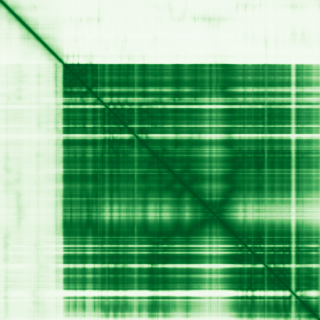
Predicted protein structure

Clinical relevance (Genomics England PanelApp)

Moderate Evidence (Amber)

  • Inherited polyposis and early onset colorectal cancer - germline testing

    BIALLELIC, autosomal or pseudoautosomal
  • GI tract tumours

    BIALLELIC, autosomal or pseudoautosomal

Disease associations (Open Targets)

  • familial adenomatous polyposis 4

    0.74
  • endometrial carcinoma

    0.65
  • hereditary neoplastic syndrome

    0.58
  • Inherited cancer-predisposing syndrome

    0.57
  • endometrial cancer

    0.37
  • endometrial neoplasm

    0.37
  • neurodegenerative disease

    0.28
  • X-linked dystonia-parkinsonism

    0.27
  • response to simvastatin

    0.27
  • response to fenofibrate

    0.27

Score is the Open Targets composite evidence score (0-1). Higher = stronger gene-disease association.

Protein function (UniProt)

DNA mismatch repair protein Msh3

Component of the post-replicative DNA mismatch repair system (MMR). Heterodimerizes with MSH2 to form MutS beta which binds to DNA mismatches thereby initiating DNA repair. When bound, the MutS beta heterodimer bends the DNA helix and shields approximately 20 base pairs. MutS beta recognizes large insertion-deletion loops (IDL) up to 13 nucleotides long. After mismatch binding, forms a ternary complex with the MutL alpha heterodimer, which is thought to be responsible for directing the downstream MMR events, including strand discrimination, excision, and resynthesis

Data sources: HGNC (CC BY 4.0), AlphaFold (CC BY 4.0, Jumper et al. Nature 2021), Genomics England PanelApp (CC BY 4.0), ClinGen, Open Targets (CC0), UniProt.

Not for sole clinical decision-making. Always verify against primary sources.