
AlphaFold predicted structure
MSN · P26038
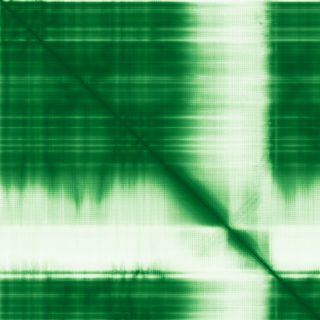
Mean pLDDT
86.4/ 100
Confident
577 residues
Confidence breakdown
- Very high(≥ 90)62%
- Confident(70–90)27%
- Low(50–70)5%
- Very low(< 50)6%
Open interactive 3D viewer
AlphaFold (Jumper et al., 2021) · CC BY 4.0
moesin
Annotations refreshed 2 months ago.
Diagnostic Grade (Green)
COVID-19 research
X-LINKED: hemizygous mutation in males, biallelic mutations in femalesPrimary immunodeficiency or monogenic inflammatory bowel disease
X-LINKED: hemizygous mutation in males, biallelic mutations in femalesCytopenia - NOT Fanconi anaemia
X-LINKED: hemizygous mutation in males, biallelic mutations in femalescombined immunodeficiency due to moesin deficiency
cancer
severe combined immunodeficiency
combined immunodeficiency
anaplastic large cell lymphoma
neurodegenerative disease
breast carcinoma
clear cell renal carcinoma
neoplasm
glioma
Score is the Open Targets composite evidence score (0-1). Higher = stronger gene-disease association.
Moesin
Ezrin-radixin-moesin (ERM) family protein that connects the actin cytoskeleton to the plasma membrane and thereby regulates the structure and function of specific domains of the cell cortex. Tethers actin filaments by oscillating between a resting and an activated state providing transient interactions between moesin and the actin cytoskeleton (PubMed:10212266). Once phosphorylated on its C-terminal threonine, moesin is activated leading to interaction with F-actin and cytoskeletal rearrangement (PubMed:10212266). These rearrangements regulate many cellular processes, including cell shape determination, membrane transport, and signal transduction (PubMed:12387735, PubMed:15039356). The role of moesin is particularly important in immunity acting on both T and B-cells homeostasis and self-tolerance, regulating lymphocyte egress from lymphoid organs (PubMed:9298994, PubMed:9616160). Modulates phagolysosomal biogenesis in macrophages (By similarity). Also participates in immunologic synapse formation (PubMed:27405666)
MSN · P26038
Mean pLDDT
86.4/ 100
Confident
577 residues
Confidence breakdown
AlphaFold (Jumper et al., 2021) · CC BY 4.0