
AlphaFold predicted structure
MT-CO2 · P00403
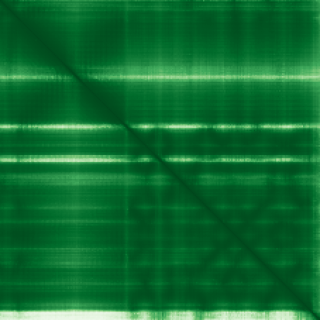
Mean pLDDT
94.8/ 100
Very high
227 residues
Confidence breakdown
- Very high(≥ 90)91%
- Confident(70–90)6%
- Low(50–70)1%
- Very low(< 50)1%
Open interactive 3D viewer
AlphaFold (Jumper et al., 2021) · CC BY 4.0
mitochondrially encoded cytochrome c oxidase II
Annotations refreshed 3 months ago.
Diagnostic Grade (Green)
Acute rhabdomyolysis
MITOCHONDRIALLikely inborn error of metabolism
MITOCHONDRIALMitochondrial disorders
MITOCHONDRIALRhabdomyolysis and metabolic muscle disorders
MITOCHONDRIALUndiagnosed metabolic disorders
MITOCHONDRIALChildhood onset dystonia, chorea or related movement disorder
MITOCHONDRIALmitochondrial disease
Isolated cytochrome C oxidase deficiency
MELAS syndrome
leigh syndrome due to mitochondrial complex iv deficiency
MERRF
MERRF syndrome
mitochondrial non-syndromic sensorineural hearing loss
Mitochondrial myopathy
inborn mitochondrial myopathy
Abnormal mitral valve physiology
Score is the Open Targets composite evidence score (0-1). Higher = stronger gene-disease association.
Cytochrome c oxidase subunit 2
Component of the cytochrome c oxidase, the last enzyme in the mitochondrial electron transport chain which drives oxidative phosphorylation. The respiratory chain contains 3 multisubunit complexes succinate dehydrogenase (complex II, CII), ubiquinol-cytochrome c oxidoreductase (cytochrome b-c1 complex, complex III, CIII) and cytochrome c oxidase (complex IV, CIV), that cooperate to transfer electrons derived from NADH and succinate to molecular oxygen, creating an electrochemical gradient over the inner membrane that drives transmembrane transport and the ATP synthase. Cytochrome c oxidase is the component of the respiratory chain that catalyzes the reduction of oxygen to water. Electrons originating from reduced cytochrome c in the intermembrane space (IMS) are transferred via the dinuclear copper A center (CU(A)) of subunit 2 and heme A of subunit 1 to the active site in subunit 1, a binuclear center (BNC) formed by heme A3 and copper B (CU(B)). The BNC reduces molecular oxygen to 2 water molecules using 4 electrons from cytochrome c in the IMS and 4 protons from the mitochondrial matrix
Curated MONDO disease pages that list MT-CO2 among their top associated genes.
MT-CO2 · P00403
Mean pLDDT
94.8/ 100
Very high
227 residues
Confidence breakdown
AlphaFold (Jumper et al., 2021) · CC BY 4.0