Skip to content
GenoLensGenoLens

MUSK

Chr 9q31.3

muscle associated receptor tyrosine kinase

MANE:
ENST00000374448.9

Annotations refreshed 9 hours ago.

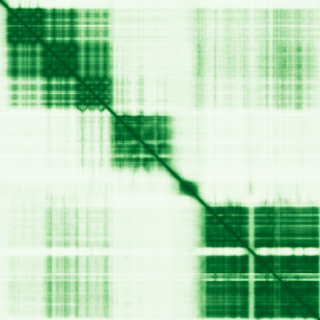
Predicted protein structure

Clinical relevance (Genomics England PanelApp)

Diagnostic Grade (Green)

  • Arthrogryposis

    BIALLELIC, autosomal or pseudoautosomal
  • Congenital myaesthenic syndrome

    BIALLELIC, autosomal or pseudoautosomal
  • Fetal anomalies

    BIALLELIC, autosomal or pseudoautosomal
  • Fetal hydrops

    BIALLELIC, autosomal or pseudoautosomal

Disease associations (Open Targets)

  • Congenital myasthenic syndromes

    0.79
  • fetal akinesia deformation sequence 1

    0.74
  • congenital myasthenic syndrome 9

    0.69
  • fetal akinesia deformation sequence

    0.56
  • Postsynaptic congenital myasthenic syndromes

    0.39
  • postsynaptic congenital myasthenic syndrome

    0.38
  • Abnormality of limbs

    0.35
  • Respiratory insufficiency

    0.33
  • Delayed gross motor development

    0.33
  • Stridor

    0.33

Score is the Open Targets composite evidence score (0-1). Higher = stronger gene-disease association.

Protein function (UniProt)

Muscle, skeletal receptor tyrosine-protein kinase

Receptor tyrosine kinase which plays a central role in the formation and the maintenance of the neuromuscular junction (NMJ), the synapse between the motor neuron and the skeletal muscle (PubMed:25537362). Recruitment of AGRIN by LRP4 to the MUSK signaling complex induces phosphorylation and activation of MUSK, the kinase of the complex. The activation of MUSK in myotubes regulates the formation of NMJs through the regulation of different processes including the specific expression of genes in subsynaptic nuclei, the reorganization of the actin cytoskeleton and the clustering of the acetylcholine receptors (AChR) in the postsynaptic membrane. May regulate AChR phosphorylation and clustering through activation of ABL1 and Src family kinases which in turn regulate MUSK. DVL1 and PAK1 that form a ternary complex with MUSK are also important for MUSK-dependent regulation of AChR clustering. May positively regulate Rho family GTPases through FNTA. Mediates the phosphorylation of FNTA which promotes prenylation, recruitment to membranes and activation of RAC1 a regulator of the actin cytoskeleton and of gene expression. Other effectors of the MUSK signaling include DNAJA3 which functions downstream of MUSK. May also play a role in acetylcholinesterase (AChE) localization at the neuromuscular junctions (NMJ) via its interaction wit COLQ (By similarity). May also play a role within the central nervous system by mediating cholinergic responses, synaptic plasticity and memory formation (By similarity)

Data sources: HGNC (CC BY 4.0), AlphaFold (CC BY 4.0, Jumper et al. Nature 2021), Genomics England PanelApp (CC BY 4.0), ClinGen, Open Targets (CC0), UniProt.

Not for sole clinical decision-making. Always verify against primary sources.