
AlphaFold predicted structure
MVK · Q03426
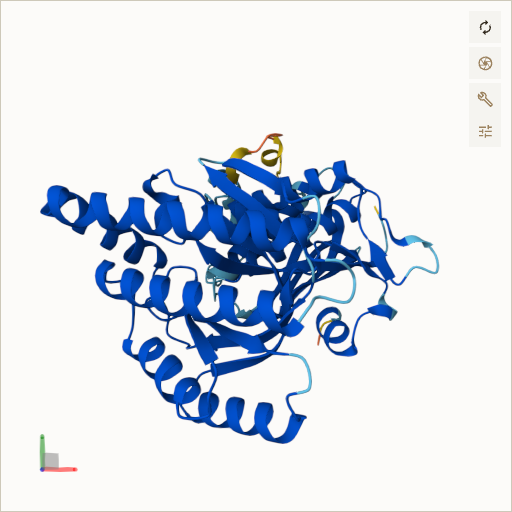
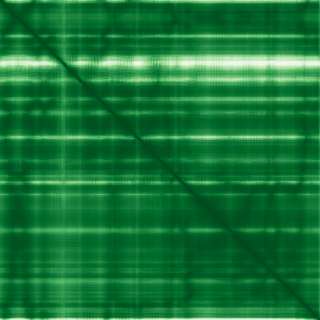
Mean pLDDT
92.3/ 100
Very high
396 residues
Confidence breakdown
- Very high(≥ 90)78%
- Confident(70–90)18%
- Low(50–70)3%
- Very low(< 50)1%
Open interactive 3D viewer
AlphaFold (Jumper et al., 2021) · CC BY 4.0
mevalonate kinase
Annotations refreshed 2 months ago.
Diagnostic Grade (Green)
Ataxia and cerebellar anomalies - narrow panel
BIALLELIC, autosomal or pseudoautosomalAutoinflammatory disorders
BIALLELIC, autosomal or pseudoautosomalCholestasis
BIALLELIC, autosomal or pseudoautosomalCOVID-19 research
BIALLELIC, autosomal or pseudoautosomalFamilial disseminated superficial actinic porokeratosis
MONOALLELIC, autosomal or pseudoautosomal, NOT imprintedGastrointestinal epithelial barrier disorders
BIALLELIC, autosomal or pseudoautosomalInfantile enterocolitis & monogenic inflammatory bowel disease
BIALLELIC, autosomal or pseudoautosomalIntellectual disability
BIALLELIC, autosomal or pseudoautosomal+15 more panels — install the extension to see the full list inline on any page.
hyperimmunoglobulinemia D with periodic fever
mevalonic aciduria
porokeratosis 3, disseminated superficial actinic type
mevalonate kinase deficiency
methylmalonic aciduria, cblB type
Vitamin B12-responsive methylmalonic acidemia type cblB
neurodegenerative disease
autoinflammatory syndrome
Retinal dystrophy
hereditary disease
Score is the Open Targets composite evidence score (0-1). Higher = stronger gene-disease association.
Mevalonate kinase
Catalyzes the phosphorylation of mevalonate to mevalonate 5-phosphate, a key step in isoprenoid and cholesterol biosynthesis (PubMed:11278915, PubMed:18302342, PubMed:9325256, PubMed:9392419)
MVK · Q03426
Mean pLDDT
92.3/ 100
Very high
396 residues
Confidence breakdown
AlphaFold (Jumper et al., 2021) · CC BY 4.0