
AlphaFold predicted structure
NACC1 · Q96RE7
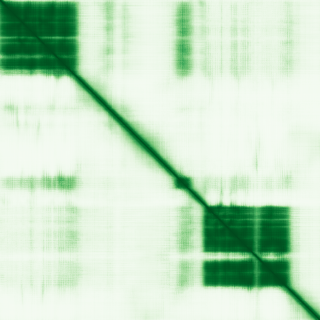
Mean pLDDT
63.1/ 100
Low
527 residues
Confidence breakdown
- Very high(≥ 90)27%
- Confident(70–90)16%
- Low(50–70)9%
- Very low(< 50)48%
Open interactive 3D viewer
AlphaFold (Jumper et al., 2021) · CC BY 4.0
nucleus accumbens associated 1
Annotations refreshed 2 months ago.
Diagnostic Grade (Green)
Bilateral congenital or childhood onset cataracts
MONOALLELIC, autosomal or pseudoautosomal, NOT imprintedDDG2P
MONOALLELIC, autosomal or pseudoautosomal, imprinted status unknownEarly onset or syndromic epilepsy
MONOALLELIC, autosomal or pseudoautosomal, NOT imprintedFetal anomalies
MONOALLELIC, autosomal or pseudoautosomal, imprinted status unknownIntellectual disability
MONOALLELIC, autosomal or pseudoautosomal, NOT imprintedneurodevelopmental disorder with epilepsy, cataracts, feeding difficulties, and delayed brain myelination
hereditary disease
placental retention
alcohol drinking
urolithiasis
neurodevelopmental disorder
neoplasm
microcephaly
melanoma
ovarian carcinoma
Score is the Open Targets composite evidence score (0-1). Higher = stronger gene-disease association.
Nucleus accumbens-associated protein 1
Functions as a transcriptional repressor. Seems to function as a transcriptional corepressor in neuronal cells through recruitment of HDAC3 and HDAC4. Contributes to tumor progression, and tumor cell proliferation and survival. This may be mediated at least in part through repressing transcriptional activity of GADD45GIP1. Required for recruiting the proteasome from the nucleus to the cytoplasm and dendritic spines
NACC1 · Q96RE7
Mean pLDDT
63.1/ 100
Low
527 residues
Confidence breakdown
AlphaFold (Jumper et al., 2021) · CC BY 4.0