
AlphaFold predicted structure
NANS · Q9NR45
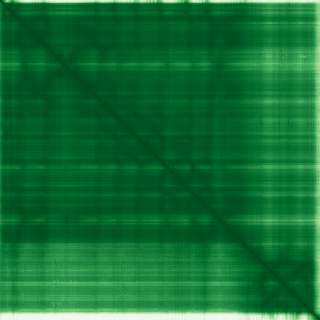
Mean pLDDT
96.0/ 100
Very high
359 residues
Confidence breakdown
- Very high(≥ 90)97%
- Confident(70–90)1%
- Low(50–70)1%
- Very low(< 50)2%
Open interactive 3D viewer
AlphaFold (Jumper et al., 2021) · CC BY 4.0
N-acetylneuraminate synthase
Annotations refreshed 2 months ago.
Diagnostic Grade (Green)
DDG2P
BIALLELIC, autosomal or pseudoautosomalFetal anomalies
BIALLELIC, autosomal or pseudoautosomalIntellectual disability
BIALLELIC, autosomal or pseudoautosomalSkeletal dysplasia
BIALLELIC, autosomal or pseudoautosomalHydrocephalus
BIALLELIC, autosomal or pseudoautosomalspondyloepimetaphyseal dysplasia, Genevieve type
neurodegenerative disease
hereditary disease
primary biliary cholangitis
neoplasm
anxiety disorder
posterior cortical atrophy
hepatocellular carcinoma
mental disorder
ovarian carcinoma
Score is the Open Targets composite evidence score (0-1). Higher = stronger gene-disease association.
N-acetylneuraminate-9-phosphate synthase
Catalyzes the condensation of phosphoenolpyruvate (PEP) and N-acetylmannosamine 6-phosphate (ManNAc-6-P) to synthesize N-acetylneuraminate-9-phosphate (Neu5Ac-9-P) (PubMed:10749855). Also catalyzes the condensation of PEP and D-mannose 6-phosphate (Man-6-P) to produce 3-deoxy-D-glycero-beta-D-galacto-non-2-ulopyranosonate 9-phosphate (KDN-9-P) (PubMed:10749855). Neu5Ac-9-P and KDN-9-P are the phosphorylated forms of sialic acids N-acetylneuraminic acid (Neu5Ac) and deaminoneuraminic acid (KDN), respectively (PubMed:10749855). Required for brain and skeletal development (PubMed:27213289)
NANS · Q9NR45
Mean pLDDT
96.0/ 100
Very high
359 residues
Confidence breakdown
AlphaFold (Jumper et al., 2021) · CC BY 4.0