
AlphaFold predicted structure
NAXD · Q8IW45
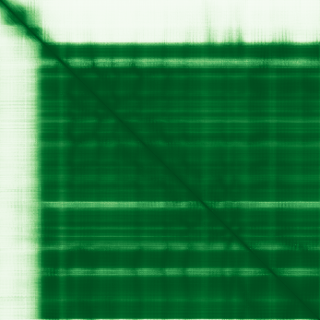
Mean pLDDT
89.3/ 100
Confident
347 residues
Confidence breakdown
- Very high(≥ 90)77%
- Confident(70–90)8%
- Low(50–70)10%
- Very low(< 50)5%
Open interactive 3D viewer
AlphaFold (Jumper et al., 2021) · CC BY 4.0
NAD(P)HX dehydratase
Annotations refreshed 3 months ago.
Diagnostic Grade (Green)
DDG2P
BIALLELIC, autosomal or pseudoautosomalLikely inborn error of metabolism
BIALLELIC, autosomal or pseudoautosomalMitochondrial disorders
BIALLELIC, autosomal or pseudoautosomalPaediatric or syndromic cardiomyopathy
BIALLELIC, autosomal or pseudoautosomalWhite matter disorders and cerebral calcification - narrow panel
BIALLELIC, autosomal or pseudoautosomalEpidermolysis bullosa and congenital skin fragility
BIALLELIC, autosomal or pseudoautosomalNAD(P)HX dehydratase deficiency
encephalopathy, progressive, early-onset, with brain edema and/or leukoencephalopathy
inborn mitochondrial metabolism disorder
mitochondrial disease
tympanic membrane perforation
tympanic membrane disorder
central nervous system cancer
protozoa infectious disease
cerebral atherosclerosis
peritonitis
Score is the Open Targets composite evidence score (0-1). Higher = stronger gene-disease association.
ATP-dependent (S)-NAD(P)H-hydrate dehydratase
Catalyzes the dehydration of the S-form of NAD(P)HX at the expense of ATP, which is converted to ADP. Together with NAD(P)HX epimerase, which catalyzes the epimerization of the S- and R-forms, the enzyme allows the repair of both epimers of NAD(P)HX, a damaged form of NAD(P)H that is a result of enzymatic or heat-dependent hydration
NAXD · Q8IW45
Mean pLDDT
89.3/ 100
Confident
347 residues
Confidence breakdown
AlphaFold (Jumper et al., 2021) · CC BY 4.0