Skip to content
GenoLensGenoLens

NCAPD2

Chr 12p13.31

non-SMC condensin I complex subunit D2

Aliases:
CNAP1, hCAP-D2, CAP-D2, KIAA0159
MANE:
ENST00000315579.10

Annotations refreshed 9 hours ago.

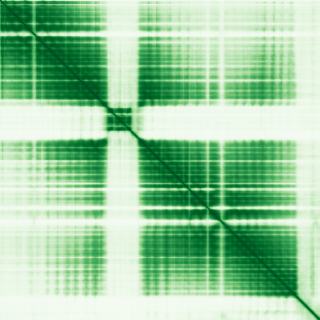
Predicted protein structure

Clinical relevance (Genomics England PanelApp)

Diagnostic Grade (Green)

  • Severe microcephaly

    BIALLELIC, autosomal or pseudoautosomal
  • Fetal anomalies

    BIALLELIC, autosomal or pseudoautosomal
  • Intellectual disability

    BIALLELIC, autosomal or pseudoautosomal
  • DDG2P

    BIALLELIC, autosomal or pseudoautosomal

Disease associations (Open Targets)

  • microcephaly 21, primary, autosomal recessive

    0.57
  • autosomal recessive primary microcephaly

    0.46
  • neurodegenerative disease

    0.38
  • hereditary disease

    0.19
  • hyperpituitarism

    0.12
  • cancer

    0.10
  • liver cancer

    0.08
  • hepatocellular carcinoma

    0.08
  • breast cancer

    0.08
  • neoplasm

    0.06

Score is the Open Targets composite evidence score (0-1). Higher = stronger gene-disease association.

Protein function (UniProt)

Condensin complex subunit 1

Regulatory subunit of the condensin complex, a complex required for conversion of interphase chromatin into mitotic-like condense chromosomes. The condensin complex probably introduces positive supercoils into relaxed DNA in the presence of type I topoisomerases and converts nicked DNA into positive knotted forms in the presence of type II topoisomerases. May target the condensin complex to DNA via its C-terminal domain (PubMed:11136719). May promote the resolution of double-strand DNA catenanes (intertwines) between sister chromatids. Condensin-mediated compaction likely increases tension in catenated sister chromatids, providing directionality for type II topoisomerase-mediated strand exchanges toward chromatid decatenation. Required for decatenation of non-centromeric ultrafine DNA bridges during anaphase. Early in neurogenesis, may play an essential role to ensure accurate mitotic chromosome condensation in neuron stem cells, ultimately affecting neuron pool and cortex size (PubMed:27737959)

Data sources: HGNC (CC BY 4.0), AlphaFold (CC BY 4.0, Jumper et al. Nature 2021), Genomics England PanelApp (CC BY 4.0), ClinGen, Open Targets (CC0), UniProt.

Not for sole clinical decision-making. Always verify against primary sources.