
AlphaFold predicted structure
NCDN · Q9UBB6
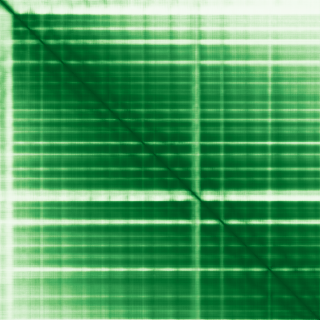
Mean pLDDT
87.6/ 100
Confident
729 residues
Confidence breakdown
- Very high(≥ 90)69%
- Confident(70–90)21%
- Low(50–70)4%
- Very low(< 50)6%
Open interactive 3D viewer
AlphaFold (Jumper et al., 2021) · CC BY 4.0
neurochondrin
Annotations refreshed 2 months ago.
Diagnostic Grade (Green)
DDG2P
MONOALLELIC, autosomal or pseudoautosomal, imprinted status unknownIntellectual disability
MONOALLELIC, autosomal or pseudoautosomal, imprinted status unknownEarly onset or syndromic epilepsy
MONOALLELIC, autosomal or pseudoautosomal, imprinted status unknownneurodevelopmental disorder with infantile epileptic spasms
epilepsy
Intellectual disability
autosomal recessive non-syndromic intellectual disability
neurodegenerative disease
systemic sclerosis
systemic lupus erythematosus
Floating-Harbor syndrome
glioblastoma
Fuchs endothelial corneal dystrophy
Score is the Open Targets composite evidence score (0-1). Higher = stronger gene-disease association.
Neurochondrin
Probably involved in signal transduction in the nervous system, via increasing cell surface localization of GRM5/mGluR5 and positively regulating its signaling (PubMed:33711248). Required for the spatial learning process. Acts as a negative regulator of Ca(2+)-calmodulin-dependent protein kinase 2 (CaMK2) phosphorylation. May play a role in modulating melanin-concentrating hormone-mediated functions via its interaction with MCHR1 that interferes with G protein-coupled signal transduction. May be involved in bone metabolism. May also be involved in neurite outgrowth (Probable)
NCDN · Q9UBB6
Mean pLDDT
87.6/ 100
Confident
729 residues
Confidence breakdown
AlphaFold (Jumper et al., 2021) · CC BY 4.0