
AlphaFold predicted structure
NDUFA9 · Q16795
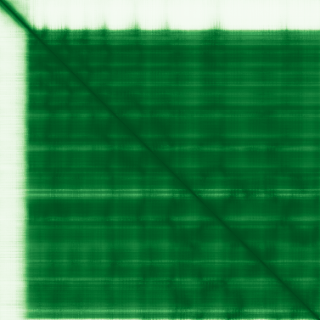
Mean pLDDT
89.6/ 100
Confident
377 residues
Confidence breakdown
- Very high(≥ 90)85%
- Confident(70–90)6%
- Low(50–70)1%
- Very low(< 50)9%
Open interactive 3D viewer
AlphaFold (Jumper et al., 2021) · CC BY 4.0
NADH:ubiquinone oxidoreductase subunit A9
Annotations refreshed 2 months ago.
Diagnostic Grade (Green)
Likely inborn error of metabolism
BIALLELIC, autosomal or pseudoautosomalMitochondrial disorder with complex I deficiency
BIALLELIC, autosomal or pseudoautosomalMitochondrial disorders
BIALLELIC, autosomal or pseudoautosomalPossible mitochondrial disorder - nuclear genes
BIALLELIC, autosomal or pseudoautosomalAdult onset dystonia, chorea or related movement disorder
BIALLELIC, autosomal or pseudoautosomalChildhood onset dystonia, chorea or related movement disorder
BIALLELIC, autosomal or pseudoautosomalDDG2P
BIALLELIC, autosomal or pseudoautosomalIntellectual disability
BIALLELIC, autosomal or pseudoautosomal+3 more panels — install the extension to see the full list inline on any page.
mitochondrial complex I deficiency, nuclear type 26
mitochondrial complex I deficiency
type 2 diabetes mellitus
Parkinson disease
diabetes mellitus
neurodegenerative disease
multiple sclerosis
Leigh syndrome
Alzheimer disease
lysosomal storage disease
Score is the Open Targets composite evidence score (0-1). Higher = stronger gene-disease association.
NADH dehydrogenase [ubiquinone] 1 alpha subcomplex subunit 9, mitochondrial
Accessory subunit of the mitochondrial membrane respiratory chain NADH dehydrogenase (Complex I), that is believed not to be involved in catalysis. Required for proper complex I assembly (PubMed:28671271). Complex I functions in the transfer of electrons from NADH to the respiratory chain. The immediate electron acceptor for the enzyme is believed to be ubiquinone
Curated MONDO disease pages that list NDUFA9 among their top associated genes.
NDUFA9 · Q16795
Mean pLDDT
89.6/ 100
Confident
377 residues
Confidence breakdown
AlphaFold (Jumper et al., 2021) · CC BY 4.0