
AlphaFold predicted structure
NEK9 · Q8TD19
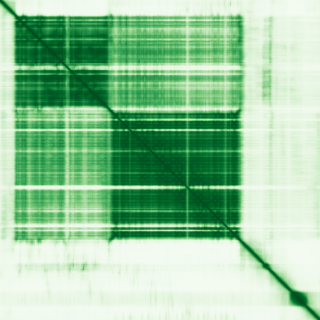
Mean pLDDT
73.9/ 100
Confident
979 residues
Confidence breakdown
- Very high(≥ 90)44%
- Confident(70–90)24%
- Low(50–70)8%
- Very low(< 50)25%
Open interactive 3D viewer
AlphaFold (Jumper et al., 2021) · CC BY 4.0
NIMA related kinase 9
Annotations refreshed 3 months ago.
Diagnostic Grade (Green)
Arthrogryposis
BIALLELIC, autosomal or pseudoautosomalFetal anomalies
BIALLELIC, autosomal or pseudoautosomalMosaic skin disorders - deep sequencing
MONOALLELIC, autosomal or pseudoautosomal, NOT imprintedNEK9-related lethal skeletal dysplasia
arthrogryposis, Perthes disease, and upward gaze palsy
nevus comedonicus syndrome
hereditary disease
neurodegenerative disease
autoimmune disorder of central nervous system
Goldberg-Shprintzen syndrome
Epidermal Inclusion Cyst
coronary artery disorder
sebaceous gland disorder
Score is the Open Targets composite evidence score (0-1). Higher = stronger gene-disease association.
Serine/threonine-protein kinase Nek9
Pleiotropic regulator of mitotic progression, participating in the control of spindle dynamics and chromosome separation (PubMed:12101123, PubMed:12840024, PubMed:14660563, PubMed:19941817). Phosphorylates different histones, myelin basic protein, beta-casein, and BICD2 (PubMed:11864968). Phosphorylates histone H3 on serine and threonine residues and beta-casein on serine residues (PubMed:11864968). Important for G1/S transition and S phase progression (PubMed:12840024, PubMed:14660563, PubMed:19941817). Phosphorylates NEK6 and NEK7 and stimulates their activity by releasing the autoinhibitory functions of Tyr-108 and Tyr-97 respectively (PubMed:12840024, PubMed:14660563, PubMed:19941817, PubMed:26522158)
NEK9 · Q8TD19
Mean pLDDT
73.9/ 100
Confident
979 residues
Confidence breakdown
AlphaFold (Jumper et al., 2021) · CC BY 4.0