
AlphaFold predicted structure
NEMF · O60524
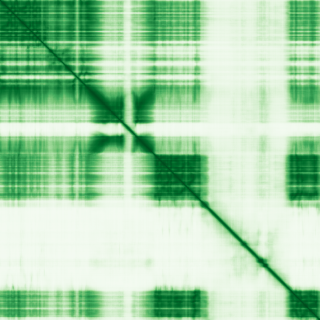
Mean pLDDT
69.7/ 100
Low
1,076 residues
Confidence breakdown
- Very high(≥ 90)23%
- Confident(70–90)39%
- Low(50–70)10%
- Very low(< 50)28%
Open interactive 3D viewer
AlphaFold (Jumper et al., 2021) · CC BY 4.0
nuclear export mediator factor
Annotations refreshed 2 months ago.
Diagnostic Grade (Green)
Hereditary neuropathy or pain disorder
BIALLELIC, autosomal or pseudoautosomalIntellectual disability
BIALLELIC, autosomal or pseudoautosomalintellectual developmental disorder with speech delay and axonal peripheral neuropathy
hereditary disease
Global developmental delay
Intellectual disability
Brain imaging abnormality
Ataxia
Respiratory distress
Tremor
axonal neuropathy
Hypotonia
Score is the Open Targets composite evidence score (0-1). Higher = stronger gene-disease association.
Ribosome quality control complex subunit NEMF
Key component of the ribosome quality control complex (RQC), a ribosome-associated complex that mediates the extraction of incompletely synthesized nascent chains from stalled ribosomes as well as their ubiquitin-mediated proteasomal degradation (PubMed:25578875, PubMed:32726578, PubMed:33406423, PubMed:33909987). Thereby, frees 60S subunit ribosomes from the stalled translation complex and prevents the accumulation of nascent polypeptide chains that are potentially toxic for the cell (PubMed:25578875, PubMed:33406423, PubMed:33909987). Within the RQC complex, NEMF specifically binds stalled 60S ribosomal subunits by recognizing an exposed, nascent chain-conjugated tRNA moiety and promotes the recruitment of LTN1 to stalled 60S subunits (PubMed:25578875). Following binding to stalled 60S ribosomal subunits, NEMF mediates CAT tailing by recruiting alanine-charged tRNA to the A-site and directing the elongation of stalled nascent chains independently of mRNA or 40S subunits, leading to non-templated C-terminal alanine extensions (CAT tails) (PubMed:33406423, PubMed:33909987). Mainly recruits alanine-charged tRNAs, but can also other amino acid-charged tRNAs (PubMed:33406423, PubMed:33909987). CAT tailing is required to promote ubiquitination of stalled nascent chains by different E3 ubiquitin-protein ligases (PubMed:33909987). In the canonical RQC pathway (RQC-L), CAT tailing facilitates LTN1-dependent ubiquitination by exposing lysine residues that would otherwise remain buried in the ribosomal exit tunnel (By similarity). In the alternative RQC pathway (RQC-C) CAT tailing creates an C-degron mainly composed of alanine that is recognized by the CRL2(KLHDC10) and RCHY1/PIRH2 E3 ligases, leading to ubiquitination and degradation of stalled nascent chains (PubMed:33909987). NEMF may also indirectly play a role in nuclear export (PubMed:16103875)
NEMF · O60524
Mean pLDDT
69.7/ 100
Low
1,076 residues
Confidence breakdown
AlphaFold (Jumper et al., 2021) · CC BY 4.0