
AlphaFold predicted structure
NFIB · O00712
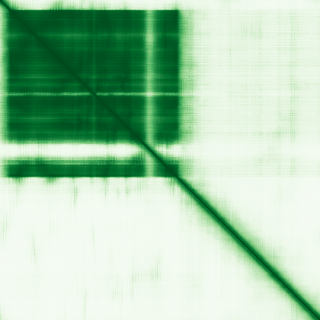
Mean pLDDT
67.3/ 100
Low
420 residues
Confidence breakdown
- Very high(≥ 90)38%
- Confident(70–90)7%
- Low(50–70)11%
- Very low(< 50)44%
Open interactive 3D viewer
AlphaFold (Jumper et al., 2021) · CC BY 4.0
nuclear factor I B
Annotations refreshed 3 months ago.
Diagnostic Grade (Green)
Beckwith-Wiedemann syndrome (BWS) and other congenital overgrowth disorders
MONOALLELIC, autosomal or pseudoautosomal, imprinted status unknownDDG2P
MONOALLELIC, autosomal or pseudoautosomal, imprinted status unknownFetal anomalies
MONOALLELIC, autosomal or pseudoautosomal, NOT imprintedIntellectual disability
MONOALLELIC, autosomal or pseudoautosomal, NOT imprintedmacrocephaly, acquired, with impaired intellectual development
macrocephaly-developmental delay syndrome
Intellectual disability
Macrocephaly
Abnormality of the skeletal system
hereditary disease
coronary artery disorder
mathematical ability
neurodegenerative disease
type 2 diabetes mellitus
Score is the Open Targets composite evidence score (0-1). Higher = stronger gene-disease association.
Nuclear factor 1 B-type
Transcriptional activator of GFAP, essential for proper brain development (PubMed:30388402). Recognizes and binds the palindromic sequence 5'-TTGGCNNNNNGCCAA-3' present in viral and cellular promoters and in the origin of replication of adenovirus type 2. These proteins are individually capable of activating transcription and replication
NFIB · O00712
Mean pLDDT
67.3/ 100
Low
420 residues
Confidence breakdown
AlphaFold (Jumper et al., 2021) · CC BY 4.0