AlphaFold predicted structure
NFKBIA · P25963
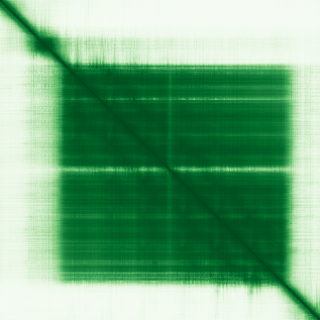
Mean pLDDT
83.5/ 100
Confident
317 residues
Confidence breakdown
- Very high(≥ 90)64%
- Confident(70–90)10%
- Low(50–70)12%
- Very low(< 50)14%
AlphaFold (Jumper et al., 2021) · CC BY 4.0
NFKB inhibitor alpha
Annotations refreshed 10 hours ago.
Diagnostic Grade (Green)
COVID-19 research
MONOALLELIC, autosomal or pseudoautosomal, imprinted status unknownEctodermal dysplasia
MONOALLELIC, autosomal or pseudoautosomal, NOT imprintedEctodermal dysplasia without a known gene mutation
MONOALLELIC, autosomal or pseudoautosomal, NOT imprintedPrimary immunodeficiency or monogenic inflammatory bowel disease
MONOALLELIC, autosomal or pseudoautosomal, imprinted status unknownFamilial Meniere Disease
ectodermal dysplasia and immunodeficiency 2
Hypohidrotic ectodermal dysplasia with immunodeficiency
psoriasis
asthma
Crohn disease
diffuse large B-cell lymphoma
inflammatory bowel disease
psoriasis vulgaris
hypohidrotic ectodermal dysplasia
childhood onset asthma
Score is the Open Targets composite evidence score (0-1). Higher = stronger gene-disease association.
NF-kappa-B inhibitor alpha
Inhibits the activity of dimeric NF-kappa-B/REL complexes by trapping REL (RELA/p65 and NFKB1/p50) dimers in the cytoplasm by masking their nuclear localization signals (PubMed:1493333, PubMed:36651806, PubMed:7479976). On cellular stimulation by immune and pro-inflammatory responses, becomes phosphorylated promoting ubiquitination and degradation, enabling the dimeric RELA to translocate to the nucleus and activate transcription (PubMed:7479976, PubMed:7628694, PubMed:7796813, PubMed:7878466)
NFKBIA · P25963

Mean pLDDT
83.5/ 100
Confident
317 residues
Confidence breakdown
AlphaFold (Jumper et al., 2021) · CC BY 4.0