AlphaFold predicted structure
NHLRC1 · Q6VVB1
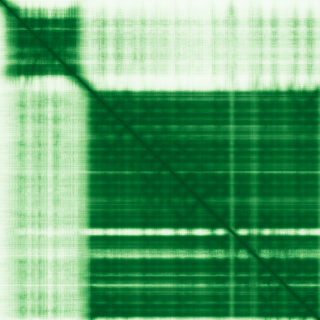
Mean pLDDT
85.4/ 100
Confident
395 residues
Confidence breakdown
- Very high(≥ 90)54%
- Confident(70–90)33%
- Low(50–70)7%
- Very low(< 50)7%
AlphaFold (Jumper et al., 2021) · CC BY 4.0
NHL repeat containing E3 ubiquitin protein ligase 1
Annotations refreshed 1 month ago.
Diagnostic Grade (Green)
Adult onset neurodegenerative disorder
BIALLELIC, autosomal or pseudoautosomalAtaxia and cerebellar anomalies - narrow panel
BIALLELIC, autosomal or pseudoautosomalEarly onset dementia (encompassing fronto-temporal dementia and prion disease)
BIALLELIC, autosomal or pseudoautosomalEarly onset or syndromic epilepsy
BIALLELIC, autosomal or pseudoautosomalGlycogen storage disease
BIALLELIC, autosomal or pseudoautosomalHereditary ataxia
BIALLELIC, autosomal or pseudoautosomalHereditary ataxia with onset in adulthood
BIALLELIC, autosomal or pseudoautosomalLikely inborn error of metabolism
BIALLELIC, autosomal or pseudoautosomal+4 more panels — install the extension to see the full list inline on any page.
Lafora disease
myoclonic epilepsy of Lafora 2
myoclonic epilepsy of Lafora 1
hereditary disease
aging
disorder of glycogen metabolism
myelosuppression
alcohol drinking
Young adult-onset Parkinsonism
bilateral striopallidodentate calcinosis
Score is the Open Targets composite evidence score (0-1). Higher = stronger gene-disease association.
E3 ubiquitin-protein ligase NHLRC1
E3 ubiquitin-protein ligase. Together with the phosphatase EPM2A/laforin, appears to be involved in the clearance of toxic polyglucosan and protein aggregates via multiple pathways. In complex with EPM2A/laforin and HSP70, suppresses the cellular toxicity of misfolded proteins by promoting their degradation through the ubiquitin-proteasome system (UPS). Ubiquitinates the glycogen-targeting protein phosphatase subunits PPP1R3C/PTG and PPP1R3D in a laforin-dependent manner and targets them for proteasome-dependent degradation, thus decreasing glycogen accumulation. Polyubiquitinates EPM2A/laforin and ubiquitinates AGL and targets them for proteasome-dependent degradation. Also promotes proteasome-independent protein degradation through the macroautophagy pathway
NHLRC1 · Q6VVB1

Mean pLDDT
85.4/ 100
Confident
395 residues
Confidence breakdown
AlphaFold (Jumper et al., 2021) · CC BY 4.0