
AlphaFold predicted structure
NLRP1 · Q9C000
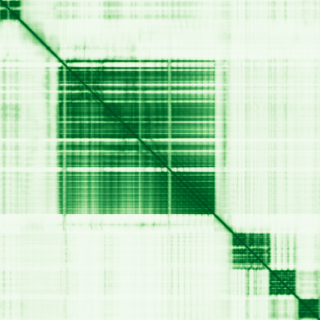
Mean pLDDT
68.3/ 100
Low
1,473 residues
Confidence breakdown
- Very high(≥ 90)17%
- Confident(70–90)47%
- Low(50–70)8%
- Very low(< 50)28%
Open interactive 3D viewer
AlphaFold (Jumper et al., 2021) · CC BY 4.0
NLR family pyrin domain containing 1
Annotations refreshed 3 months ago.
Diagnostic Grade (Green)
COVID-19 research
BOTH monoallelic and biallelic, autosomal or pseudoautosomalPrimary immunodeficiency or monogenic inflammatory bowel disease
BOTH monoallelic and biallelic, autosomal or pseudoautosomalRare genetic inflammatory skin disorders
MONOALLELIC, autosomal or pseudoautosomal, NOT imprintedDuctal plate malformation
BOTH monoallelic and biallelic, autosomal or pseudoautosomalcorneal intraepithelial dyskeratosis-palmoplantar hyperkeratosis-laryngeal dyskeratosis syndrome
autoinflammation with arthritis and dyskeratosis
Corneal intraepithelial dyskeratosis with palmoplantar hyperkeratosis and laryngeal dyskeratosis
respiratory papillomatosis, juvenile recurrent, congenital
vitiligo
DNA methylation
eye disorder
migraine disorder
digestive system neoplasm
Chorioretinal scar
Score is the Open Targets composite evidence score (0-1). Higher = stronger gene-disease association.
NACHT, LRR and PYD domains-containing protein 1
Acts as the sensor component of the NLRP1 inflammasome, which mediates inflammasome activation in response to various pathogen-associated signals, leading to subsequent pyroptosis (PubMed:12191486, PubMed:17349957, PubMed:22665479, PubMed:27662089, PubMed:31484767, PubMed:33093214, PubMed:33410748, PubMed:33731929, PubMed:33731932, PubMed:35857590). Inflammasomes are supramolecular complexes that assemble in the cytosol in response to pathogens and other damage-associated signals and play critical roles in innate immunity and inflammation (PubMed:12191486, PubMed:17349957, PubMed:22665479). Acts as a recognition receptor (PRR): recognizes specific pathogens and other damage-associated signals, such as cleavage by some human enteroviruses and rhinoviruses, double-stranded RNA, UV-B irradiation, or Val-boroPro inhibitor, and mediates the formation of the inflammasome polymeric complex composed of NLRP1, CASP1 and PYCARD/ASC (PubMed:12191486, PubMed:17349957, PubMed:22665479, PubMed:25562666, PubMed:30096351, PubMed:30291141, PubMed:33093214, PubMed:33243852, PubMed:33410748, PubMed:35857590). In response to pathogen-associated signals, the N-terminal part of NLRP1 is degraded by the proteasome, releasing the cleaved C-terminal part of the protein (NACHT, LRR and PYD domains-containing protein 1, C-terminus), which polymerizes and associates with PYCARD/ASC to initiate the formation of the inflammasome complex: the NLRP1 inflammasome recruits pro-caspase-1 (proCASP1) and promotes caspase-1 (CASP1) activation, which subsequently cleaves and activates inflammatory cytokines IL1B and IL18 and gasdermin-D (GSDMD), leading to pyroptosis (PubMed:12191486, PubMed:17349957, PubMed:22665479, PubMed:32051255, PubMed:33093214). In the absence of GSDMD expression, the NLRP1 inflammasome is able to recruit and activate CASP8, leading to activation of gasdermin-E (GSDME) (PubMed:33852854, PubMed:35594856). Activation of NLRP1 inflammasome is also required for HMGB1 secretion; the active cytokines and HMGB1 stimulate inflammatory responses (PubMed:22801494). Binds ATP and shows ATPase activity (PubMed:11113115, PubMed:15212762, PubMed:33243852). Plays an important role in antiviral immunity and inflammation in the human airway epithelium (PubMed:33093214). Specifically recognizes a number of pathogen-associated signals: upon infection by human rhinoviruses 14 and 16 (HRV-14 and HRV-16), NLRP1 is cleaved and activated which triggers NLRP1-dependent inflammasome activation and IL18 secretion (PubMed:33093214). Positive-strand RNA viruses, such as Semliki forest virus and long dsRNA activate the NLRP1 inflammasome, triggering IL1B release in a NLRP1-dependent fashion (PubMed:33243852). Acts as a direct sensor for long dsRNA and thus RNA virus infection (PubMed:33243852). May also be activated by muramyl dipeptide (MDP), a fragment of bacterial peptidoglycan, in a NOD2-dependent manner (PubMed:18511561). The NLRP1 inflammasome is also activated in response to UV-B irradiation causing ribosome collisions: ribosome collisions cause phosphorylation and activation of NLRP1 in a MAP3K20-dependent manner, leading to pyroptosis (PubMed:35857590)
NLRP1 · Q9C000
Mean pLDDT
68.3/ 100
Low
1,473 residues
Confidence breakdown
AlphaFold (Jumper et al., 2021) · CC BY 4.0